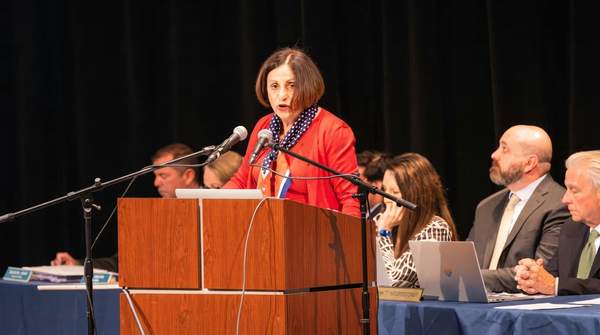
In communities across the nation, the landscape of evolving local community services is being reshaped by powerful, often conflicting, forces. On one hand, over 1,300 nonprofit organizations recently united to oppose proposed federal rule changes they warn could disrupt the delivery of essential services. On the other, cities like Santa Ana, California, are proactively updating comprehensive climate action plans to meet future challenges head-on. This juxtaposition of defensive action and forward-looking strategy captures a pivotal moment for the programs and providers that form the backbone of our communities.
The core trend is one of forced evolution: local community services are simultaneously contracting under budgetary and political pressure while expanding and innovating in response to new, complex resident needs like climate resilience.
What are the major funding shifts in local community services?
Let's delve into the financial pressures shaping the modern community service sector. The numbers tell a compelling story of constraint and reallocation, where long-standing programs face significant cutbacks, creating a ripple effect on residents who rely on them. State-level budget decisions offer a clear window into this trend, with some legislatures opting for austerity that directly impacts agency capacity and service delivery.
A stark example can be found in Kentucky's new two-year state budget. According to an analysis by the Kentucky Center for Economic Policy, the budget implements 7% cuts to a wide range of state agencies. This reduction translates to a decrease of $275 million in General Fund appropriations over the biennium. The judicial branch is not immune, facing a similar 7% cut that could jeopardize specialty courts designed to address complex issues like addiction and mental illness. Furthermore, the budget agreement falls $691 million short of fully funding the state's Medicaid benefits, a critical healthcare safety net for thousands of residents.
The impact extends deeply into education and family support. The Kentucky budget continues a long-term pattern of underfunding, with essentially flat funding for K-12 schools and cuts to most of higher education. When accounting for inflation, total funding for postsecondary institutions is projected to be down 41% by 2028 compared to 2008 levels. Crucially, funding for preschool, extended school services, Family Resource and Youth Service Centers, and school-based mental health providers will remain frozen at 2019 levels through 2028, representing a significant cut in real-dollar resources over nearly a decade.

Beyond state-level decisions, a significant potential disruption looms at the federal level, threatening the partnership between government and the nonprofit sector. On March 31, 2026, the Legal Defense Fund (LDF) joined a coalition of over 1,300 nonprofit organizations to oppose proposed changes to the federal System for Award Management (SAM) portal. As detailed by the Legal Defense Fund, these organizations argue the changes would impose vague and complex certification requirements on groups receiving federal financial assistance. The concern is that these new rules could expose nonprofits to legal harassment and costly investigations, creating substantial new financial and legal risks.
This potential policy shift represents a different kind of funding challenge—not a direct cut, but the creation of a high-risk environment that could compel organizations to withdraw from federal partnerships altogether. If nonprofits, which are often the on-the-ground implementers of federally funded programs, decide the risks are too great, communities could lose access to essential services ranging from housing assistance to public health initiatives. This creates a precarious situation where the infrastructure for service delivery itself is under threat.
How are community programs adapting to evolving needs?
In this challenging environment, adaptation is not just an option; it is a necessity for survival and relevance. Community service providers are restructuring their models, seeking new efficiencies, and redefining their missions to align with both fiscal realities and emerging public needs. This adaptation takes many forms, from fundamental changes in healthcare delivery in rural areas to proactive, long-range planning for environmental challenges in urban centers.
One of the most significant structural adaptations is occurring in rural healthcare. Faced with persistent financial challenges, many small rural hospitals have struggled to maintain traditional inpatient services. In response, the federal government introduced the "Rural Emergency Hospital" (REH) designation in 2023. This model allows critical access hospitals and other facilities with fewer than 50 beds to receive enhanced Medicare reimbursement and annual facility payments in exchange for discontinuing all inpatient services. They must, however, maintain a 24-hour emergency department and robust outpatient care. A study published in a U.S. National Library of Medicine journal found that hospitals converting to REH status typically had low inpatient volumes and occupancy rates, suggesting the model provides a financial lifeline by allowing them to focus on more sustainable services.
The same study, however, reveals the complexity of such adaptations. While news articles about REH conversions were largely neutral in tone (54.5%) and frequently highlighted the financial benefits (90%), the view from the community was different. Interviews with rural residents uncovered negative perceptions of their local healthcare options, with many expressing a preference not to use their local REH even when it was available. This highlights a critical tension in program adaptation: a solution that ensures an organization's financial survival may not fully align with the needs or preferences of the community it serves. It answers the question of "How do we keep the lights on?" but raises another: "What does this mean for local consumers?"
In contrast to this reactive, financially driven adaptation, other communities are engaging in proactive, forward-looking planning. The City of Santa Ana, California, provides a compelling example. According to the city's official website, it released its first formal Climate Action Plan (CAP) by 2015. The plan set ambitious, data-driven goals: a community-wide emissions reduction of 15% by 2020 and 30% by 2035, alongside municipal operations targets of 30% by 2020 and 40% by 2025. The city is now actively updating this plan to align with new statewide climate policies and emerging technologies. This represents a fundamental expansion of what constitutes a "local community service"—moving beyond traditional social services to include long-term environmental stewardship and resilience planning.
| Entity | Adaptation Strategy | Primary Driver | Key Outcome / Goal |
|---|---|---|---|
| Rural Hospitals | Conversion to Rural Emergency Hospital (REH) | Financial Insolvency | Enhanced Medicare reimbursement; maintain emergency/outpatient services |
| City of Santa Ana | Climate Action & Adaptation Plan (CAP) | Environmental Stewardship | Community-wide emissions reduction of 30% by 2035 |
| Kentucky Agencies | Service reduction / flat-funding | State Budget Cuts | Operating within a reduced budget; 7% cuts for many agencies |
| Federal Grantees | Potential withdrawal from partnerships | Increased Legal/Financial Risk | Avoidance of complex compliance and potential investigations |
New offerings and innovations in local community services
Santa Ana's proactive planning illustrates a broader trend of innovation in community services, addressing 21st-century challenges. Climate adaptation and resilience have become a significant new frontier for service providers, prompting organizations to develop programs that help communities prepare for and respond to environmental stressors. This work moves beyond emergency response to encompass long-term capacity building.
The American Red Cross, for instance, operates a "Community Adaptation Program" in the Texas Gulf Coast Region, an area highly vulnerable to extreme weather events. This initiative focuses on building local resilience by working with community leaders and residents to identify risks and develop tailored preparedness strategies. Similarly, the Population, Environmental, Risks and Climate Crisis (PERCC) Initiative, supported by the Population Council, is funding ten innovative case studies focused on climate justice. These studies explore the complex intersections of climate change with public health, migration, and social equity, providing the data-driven insights needed to design effective and equitable adaptation services.
The intertwining of social services and climate resilience is a global trend. For example, a project documented by Frontiers in Global Women's Health scales up sexual and reproductive health services in Uganda as a climate adaptation component. Empowering women and ensuring healthcare access builds more resilient households and communities, better equipping them to handle climate-related shocks like food insecurity or displacement. This innovative framing recasts a traditional health service as a vital tool for climate resilience, demonstrating the creative and cross-sectoral thinking defining this new wave of community service.
What Comes Next
The future of local community services will diverge along two distinct paths: one defined by contraction and risk, the other by innovation and proactive investment. The direction a community takes will depend on the interplay of state and federal policy, local leadership, and the capacity of its nonprofit sector.
The most immediate and widespread threat lies in the potential chilling effect of federal policy changes, such as the proposed updates to the SAM portal. The opposition from over 1,300 organizations underscores the gravity of the situation. Diane Yentel, President and CEO of the National Council of Nonprofits, stated, "The changes to federal grant certifications proposed by the Trump Administration undermine this effective partnership and ultimately will harm the people and communities that rely on nonprofits and the services they provide." Her words highlight the symbiotic relationship between government funders and nonprofit service providers—a relationship that could be fractured by increased administrative burdens and legal risks.
Demetria McCain, Director of Policy at the Legal Defense Fund, elaborated on the specific concerns, noting the proposal includes "vague requirements that reference federal guidance related to lawful diversity, equity, and inclusion programs, which have raised concerns." If organizations dedicated to civil rights and social justice perceive the proposal as creating legal uncertainty or risk, they may be compelled to decline federal funds, potentially leading to reduced services in communities with high needs. This could result in a decrease in available resources for residents if local providers withdraw from federal funding opportunities.
The alternative path is continued innovation, modeled by Santa Ana's climate plan and Red Cross adaptation programs. This redefines community service to include preventative, forward-thinking initiatives. Success requires investment, political will, and data-driven planning, actively creating new services for emerging realities beyond just maintaining existing ones. The challenge is securing resources and public support for these long-term investments, especially in a fiscal environment where even foundational services are being cut.
Key Takeaways
- State-level funding for many local services is contracting, with some states implementing direct agency cuts and freezing budgets for critical programs like education and mental health, effectively reducing resources over time.
- Potential changes to federal grant regulations pose a significant risk to the nonprofit sector, with over 1,300 organizations warning that new compliance burdens could force them to abandon federal partnerships, disrupting essential community services.
- Service providers are adapting through major structural changes, such as the Rural Emergency Hospital model, which can provide financial stability but may face mixed reception from residents who perceive a reduction in care.
- A new frontier for community service is emerging around proactive, long-term challenges like climate change, with cities and organizations developing innovative adaptation and resilience programs to meet future resident needs.