New Revenue Bills Challenge Local Government Funding Models

In Iowa, Governor Kim Reynolds signed a property tax relief bill into law, capping city and county general revenue growth at 2% annually, with an exception for new construction, Iowa Public Radio repo

MA
Marco Alvarez

May 27, 2026 · 5 min read

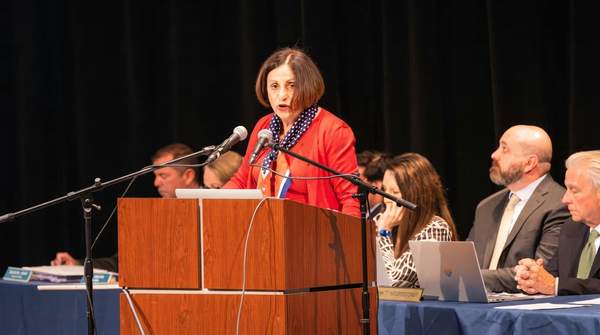
A city hall building partially obscured by a large, ominous shadow, symbolizing the impact of new revenue bills on local government funding.

In Iowa, Governor Kim Reynolds signed a property tax relief bill into law, capping city and county general revenue growth at 2% annually, with an exception for new construction, Iowa Public Radio reports. The signing of the property tax relief bill directly constrains local governments' ability to fund essential services and shapes their future budgets. Municipalities, including Des Moines, now face a tighter fiscal environment, potentially impacting public infrastructure and community programs.

State legislatures are passing bills to offer property tax relief and manage local budgets. Yet, these measures often cap local revenue growth, creating a fiscal squeeze on local government services. States present these caps as taxpayer benefits, but they fundamentally shift fiscal risk to local entities.

Local governments will likely face increasing pressure to innovate funding models or make difficult service cuts as state-imposed revenue limits become more common. This could lead to a divergence in service quality between fiscally robust and constrained localities. 'Property tax relief' can thus translate into a direct state takeover of local fiscal autonomy.

Iowa's legislative action is not isolated. It signals a growing trend: state governments directly limiting local fiscal autonomy in the name of tax relief. While framed as a taxpayer benefit, the Iowa property tax relief bill fundamentally shifts fiscal risk to local governments. Capping general revenue growth at 2% annually means 'relief' for some property owners directly mandates a fiscal squeeze on municipal services. This forces municipalities to either cut essential services or seek alternative, often regressive, revenue streams to compensate for constrained growth.

The National Tax Landscape: A Snapshot of Local Funding

  • $7,038 — State and local governments collected this amount per capita in total state and local taxes in FY 2023, according to Tax Foundation.
  • $15,009 — The District of Columbia had the highest tax collections per capita in FY 2023.
  • New York, North Dakota, Hawaii, Connecticut, and New Jersey — These states had the highest per capita tax collections after DC, reflecting diverse economic bases and tax policies.
  • Mississippi, Tennessee, Alabama, South Carolina, and Arizona — These states recorded the lowest per capita tax collections, indicating varied fiscal capacities across the nation.


These figures reveal a vast disparity in tax burdens and revenue generation capacity across regions. The vast disparity in tax burdens and revenue generation capacity across regions illustrates the varied financial pressures and political landscapes influencing state-level interventions on local government funding. The wide range of per capita collections means state-level decisions can have vastly different implications depending on the local economic context.

State Legislatures Tighten the Purse Strings on Local Revenue

StateLegislative Action on Property Tax ReliefImpact on Local Government Revenue
IowaReplaced homestead tax credit with a 10% homestead property tax exemption, adjusted for inflation.Directly caps city and county general revenue growth at 2% annually, limiting fiscal capacity.
MinnesotaUpdated tax code, provided a one-time $125 million increase for the property tax refund program through omnibus tax bill HF 2435.Supplements local government funding through direct relief and state funding for projects.

Sources: Iowa Public Radio, League of Minnesota Cities

States are actively reshaping local tax bases and offering relief, often at the expense of local revenue flexibility and long-term planning. The stark contrast between Iowa's revenue caps and Minnesota's direct funding and bonding initiatives shows a growing divergence in state-local fiscal relations. A municipality's capacity to deliver services is increasingly dependent on its state legislature's chosen method of 'relief'.

The Drivers Behind State Intervention in Local Budgets

State legislatures leverage control over bonding and tax codes to influence local fiscal decisions. This is driven by economic priorities and political mandates for tax relief. Minnesota's 2023 legislative session, for instance, saw lawmakers pass bonding, taxes, and other budget bills, according to the League of Minnesota Cities. Minnesota's 2023 legislative session, for instance, saw lawmakers pass bonding, taxes, and other budget bills, according to the League of Minnesota Cities, highlighting the broad scope of state authority over fiscal matters.

The capital investment package included $1.1835 billion in general obligation bond authorizations and $91.25 million from other funding sources through HF 719. These significant state-level allocations guide development and manage infrastructure projects, inherently impacting local government funding models. This centralized control allows states to address perceived taxpayer burdens while simultaneously directing local spending.

Specific Services and Populations Feeling the Impact

State funding decisions directly affect specific local services and populations, showing the real-world consequences of these policy shifts. The Minnesota Legislature passed an omnibus pension bill, spending $15 million in the current budget and $25 million ongoing. This primarily reduces the cost-of-living adjustment waiting period for the PERA Police & Fire Plan, according to the League of Minnesota Cities. This directly strengthens public safety services by addressing pension stability for first responders.

Additionally, a $165 million housing finance and policy bill passed, including $100 million in housing infrastructure bonds and $40 million for the Family Homeless Prevention and Assistance Program. Such targeted state investments can directly bolster or constrain critical local services like public safety pensions and housing. They often dictate local priorities and the quality of life for residents, especially vulnerable populations.

This complex interplay means companies and residents considering relocation must now scrutinize state legislative actions more closely than ever. Policies like Iowa's property tax caps directly dictate the future quality and availability of local infrastructure and services, impacting everything from public safety to economic development.

Seeking New Paradigms for Local Government Funding

As state-imposed limits on traditional revenue streams become more common, local governments may increasingly explore performance-based funding or other innovative models to ensure service delivery and maintain fiscal solvency.

  • New York City tied 100 percent of funding to measured performance in workforce development services in the late 1990s, according to Reason.

New York City tied 100 percent of funding to measured performance in workforce development services in the late 1990s, according to Reason. New York City's historical example of tying 100 percent of funding to measured performance in workforce development services in the late 1990s, according to Reason, shows a potential pathway for municipalities to secure funding by demonstrating tangible outcomes, moving beyond reliance on property taxes alone. Faced with revenue bills that cap growth, local entities could develop detailed metrics for service delivery, such as public safety response times or waste management efficiency. This would attract state or private investment tied to specific performance targets. Such a shift would push local government funding models towards greater accountability and results-driven resource allocation.

As state legislatures continue to centralize fiscal control, municipalities operating under strict revenue caps, like those in Iowa, will likely be compelled to significantly restructure their budgets and seek unconventional revenue streams to sustain community development.