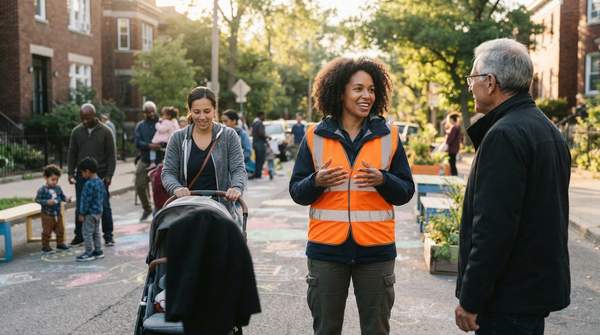
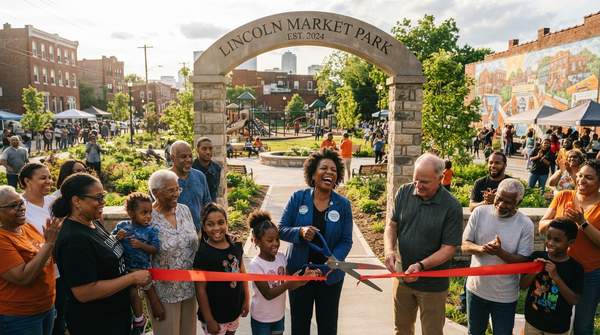
In Quebec's Saint-Roch area, urban renewal strategies were directly shaped by a neighborhood-identity assessment, demonstrating a proactive approach to preserving local character. The assessment captured the unique characteristics and subjective meanings residents attached to their environment, ensuring development honored community heritage and lived experiences.
Strong legal frameworks exist to protect historic character, but effective preservation often falls short by not fully integrating the subjective meanings inhabitants attach to a place. A critical gap is created: municipalities have tools to safeguard physical structures, but deeper, emotional connections to a neighborhood are frequently overlooked.
Municipalities combining robust land use controls with deep community engagement and flexible, mixed-use zoning are more likely to achieve sustainable neighborhood character preservation and high liveability. The holistic strategy recognizes that true neighborhood character encompasses both physical form and social fabric.
The Municipal Toolkit for Preservation
Local governments use established mechanisms to protect historic resources and neighborhood character. The Municipalities Planning Code (MPC) allows for historic resource protection through local land use and planning controls, often with advisory assistance from a municipal Historical Commission, according to Chester County Planning Commission.
The Historic District Act (HDA) further enables municipalities to protect historic character within designated local historic districts. The Pennsylvania Historical and Museum Commission typically certifies these districts, with local standards administered by a Historic Architectural Review Board (HARB), as detailed by Chester County Planning Commission. Legislative frameworks provide foundational authority for local governments to manage and protect historic and cultural assets. However, the mere existence of these robust legal tools does not guarantee effective or equitable outcomes; their implementation often fails to capture the subjective human element of 'place meaning,' leading to preservation efforts that are legally sound but socially insensitive.

Navigating Historic District Commissions
Property owners within a historic district must apply to the local Historic District Commission for a Certificate of Appropriateness (COA) before beginning any alterations, according to Michigan Economic Development Corporation. The COA ensures proposed changes align with the district's character.
Establishing a historic district also follows a structured, multi-stage process. A Study Committee evaluates potential districts, submitting a final report to the local legislative body up to one year after a public hearing, as outlined by Michigan Economic Development Corporation. Both the COA and district designation processes are designed for careful consideration, yet they often overlook qualitative community input, focusing instead on regulatory compliance rather than the subjective meanings of a place.
Beyond Bricks and Mortar: The Human Element of Place
Effective neighborhood preservation extends beyond buildings to encompass human experience and subjective connections residents have to their surroundings. Planners often focus on architectural appearance but fall short in integrating deeper place meanings, according to research in Urban Planning with Identity: Exploring Alternative Methods to Preserve Urban Identity. The oversight can lead to preservation efforts disconnected from community needs.
When planning ignores these subjective elements, it risks marginalization, exclusion, and erasure of identities, perpetuating inequalities and social divisions, as discussed in Urban Planning with Identity: Exploring Alternative Methods to Preserve Urban Identity. Municipalities are squandering their legal powers by prioritizing architectural aesthetics over residents' lived experiences and subjective meanings, leading to imposed, rather than organic, preservation. The approach risks undermining the very character they aim to protect by alienating the people who define it.
The Tangible Benefits of Preserving Character
Thoughtful preservation efforts yield direct positive outcomes for communities, contributing to liveability and a stronger sense of place. Protecting historic resources and their context, while allowing for compatible alterations and new development, helps maintain existing character for future generations, according to Chester County Planning Commission. The approach fosters a unique sense of identity, attracting residents and visitors, and creating districts that are both historically rich and economically vibrant.
Adapting Zoning for Evolving Neighborhoods
How does zoning impact neighborhood character in commercial areas with high vacancies?
Traditional commercial zoning, often designed for single-use big-box stores, frequently fails when commercial vacancies exceed 20%, according to Elgaronline. Zoning that prioritizes mixed-use development and smaller retail footprints works better, allowing for a more resilient and diverse commercial environment. The flexibility helps maintain a neighborhood's vitality by adapting to modern economic realities.
What role does community engagement play in successful preservation?
Community engagement ensures preservation efforts reflect residents' subjective meanings and lived experiences, not just architectural aesthetics. Proactive neighborhood-identity assessments, like Quebec's Saint-Roch area, directly shape urban renewal strategies to align with local values. Community engagement fosters stronger community ties and organic preservation.
How can municipalities balance historic preservation with the need for new development?
Balancing historic preservation with new development requires compatible alterations and infill development that respects existing character while meeting contemporary needs. Municipalities can implement design guidelines encouraging appropriate scale, materials, and form for new construction within historic contexts. Design guidelines allow neighborhoods to evolve without losing their distinctive identity, supporting both heritage and growth.
Holistic Preservation for Liveable Communities
Successful neighborhood character preservation is deeply intertwined with residents' socioeconomic well-being. Low area-level socioeconomic deprivation strongly correlates with perceiving a neighborhood as liveable, according to ScienceDirect. Preservation efforts focused solely on historic aesthetics, without addressing underlying social and economic factors, risk perpetuating inequalities and failing to create truly vital, inclusive places.
Rigid land-use controls, like traditional commercial zoning failing with over 20% vacancies, actively undermine community vitality by not adapting to modern economic realities. Flexible, mixed-use zoning, coupled with a deep understanding of community identity, offers a path toward more resilient and equitable neighborhoods.
The strong link between low socioeconomic deprivation and perceived liveability suggests that historic preservation efforts, if not coupled with equitable development strategies, risk becoming tools of gentrification. By 2026, municipalities that adopt a community-first approach, integrating subjective place meanings and adaptive zoning, will likely see greater success in fostering truly liveable and distinctive neighborhoods.