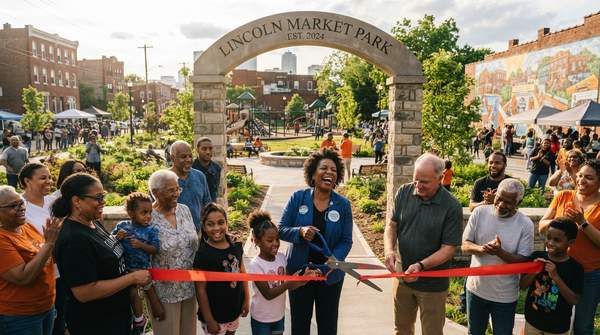
The Ville neighborhood in St. Louis has gained a vital new green space with the transformation of a long-vacant lot at 4149 Dr. Martin Luther King Drive into Lincoln Market Park. This project, spearheaded by the community organization 4theVille, directly addresses a critical need for accessible green space and community gathering areas, offering a vibrant hub for cultural programming and leisure. The park's development represents a significant step in the broader revitalization efforts along Dr. Martin Luther King Drive, aiming to restore community trust and foster a sense of rebirth in this historic area.
Amenities and Design: A Hub for Community and Art
Lincoln Market Park is designed as a versatile community asset, capable of accommodating up to 200 people for various activities. A central feature of the park is its permanent public art, including a monumental bronze sculpture titled "Amalgam (Meditation)" by renowned artist Nick Cave. This installation is intended to serve as a focal point for reflection and cultural programming, embodying 4theVille's vision for the space as a place of cultural significance and community engagement.
The park's design elements aim to create an inviting environment that supports movement, leisure, and community interaction. It provides a much-needed outdoor venue for residents, offering a dedicated space for gatherings, events, and quiet contemplation. This investment in high-caliber public art and thoughtful design reflects the belief, as stated by 4theVille, that The Ville neighborhood deserves the same quality of investment as any other community in the city.
Echoes of the Past: The Site's Historical Significance
The land where Lincoln Market Park now stands carries a rich and complex history, with documented commercial uses dating back to at least 1890. Over the decades, the site at 4149 Dr. Martin Luther King Drive, formerly Easton Avenue, housed various small businesses, including a lumberyard, a cement company, and a dressmaker. This long-standing commercial activity underscores the site's historical importance as a neighborhood hub.
A pivotal moment in the site's history occurred in 1946 when Kroger Supermarkets opened a store there. However, community members and the St. Louis NAACP, under the leadership of prominent figure Margaret Bush Wilson, initiated protests against the store's discriminatory treatment and employment practices toward Black St. Louisans. These protests ultimately led to Kroger's closure. Following this, a Black-owned grocery business, Lincoln Market, relocated from Mill Creek Valley to the site, establishing a new legacy of economic justice and ownership that became a vital community hub.