Chicago residents who want a say in their parks have several distinct official channels, and the right one depends on what you are trying to influence. The Chicago Park District runs an annual budget input process with in-person and virtual forums plus an online form; it gathers community feedback for long-term strategic plans through town halls, focus groups, surveys and interviews; it hosts community forums and listening sessions on the future of specific parks; and it requires organizers of the largest park events to hold publicly noticed community meetings. Matching your concern to the correct channel is the difference between feedback that lands in the right process and feedback that goes nowhere.
Understanding Chicago Park District Planning Initiatives
The Park District's decisions fall into a few broad categories, each with its own rhythm. The annual budget determines how the District funds its parks and programs in a given fiscal year. Strategic plans set priorities over a longer horizon: the District's current plan, covering 2025 through 2030, includes a new Mission and Vision along with refreshed Values and Goals, and the District describes it as a "North Star" guiding decisions. Capital improvement projects—physical changes to specific parks, such as the Grant Park Framework Plan—unfold over years. Finally, large permitted events, like festivals drawing tens of thousands of people, affect neighboring residents and businesses and carry their own engagement requirements.
These categories overlap in practice. The District's General Superintendent and CEO has said that what officials heard through the strategic plan process confirmed what they had been hearing from residents through the monthly board process, and that the District worked simultaneously on initiatives to enhance wellness and build a more sustainable park system. So a resident's input at a budget forum can echo into strategic priorities—but each channel still has its own moment and format.
Chicago Park District Engagement Channels at a Glance
The table below categorizes the District's public input mechanisms by the type of plan or decision each is designed to influence, so you can route your feedback to the process that actually controls the outcome you care about.
| Type of Initiative | Primary Engagement Channel(s) | Typical Timing | Participation Mechanics |
|---|---|---|---|
| Annual budget | In-person public forum, virtual public forum, online form | Annually; the Fiscal Year 2027 cycle held forums in September 2026 | Register or log in ahead of the 6 p.m. start; online participants enter a waiting room before admission |
| Strategic plan (multi-year) | Town halls, focus groups, community meetings, interviews, surveys | During plan development; the 2025–2030 plan drew over 100 hours of engagement | More than 10,000 Chicagoans participated in the last plan's process |
| Capital improvement projects and park futures | Community forums and listening sessions; smaller community roundtables | Announced per project or series; a 2022 series ran September–October | Speakers sign up at a registration table after a brief presentation by the Superintendent |
| Large events (10,000+ attendees per day) | Publicly noticed community meeting hosted by the event organizer | At least 30 days before the event, under the District's Community Engagement Guidelines introduced in 2022 | Meetings must be accessible to all residents, with accommodations for disabilities and language barriers |
One further channel worth knowing: the Grant Park Framework Plan shows the District also working with the community through a participatory budget process to invest $585,000 generated from permitted events held in that park—meaning residents can, in some cases, directly shape how event revenue is spent locally.
Participating in the Annual Budget Process
The budget cycle is the most predictable entry point. For the Fiscal Year 2027 budget, the District announced three ways to participate: an in-person public budget forum, a virtual forum, and an online form for sharing ideas on the spending plan. General Superintendent and CEO Carlos Ramirez-Rosa framed the stakes plainly: "Our most important stakeholders are Chicago residents, whose input directly guides how we fund our parks and serve patrons."
The 2026 announcements show the typical format. The in-person forum was held at the District's headquarters at 4830 S. Western Avenue, with registration beginning at 5 p.m. and the forum starting promptly at 6 p.m. The online forum ran the same week at 6 p.m., with attendees able to log in from 5:30 p.m. and placed in a waiting room before being admitted. To prepare, arrive or log in early, and bring specific ideas about spending priorities—the online form is the lowest-effort option for residents who cannot attend either forum. Because dates shift each year, check the District's website for the current cycle's schedule.
Influencing Strategic Plans and Capital Improvement Projects
Strategic planning engagement is broader and less frequent. For the 2025–2030 plan, the District asked Chicagoans to share their vision through a campaign it described as asking the city how they "PictureYourParks." The engagement ran to over 100 hours of town halls, focus groups and community meetings, plus interviews and surveys, and drew input from more than 10,000 Chicagoans. That feedback, along with staff input, shaped the plan's Mission, Vision, Values and Goals. When the District issued a request for proposals for a new comprehensive strategic plan, it signaled that a similarly robust community engagement process would accompany future planning rounds—so residents watching for the next plan should look for town halls and surveys when development begins.
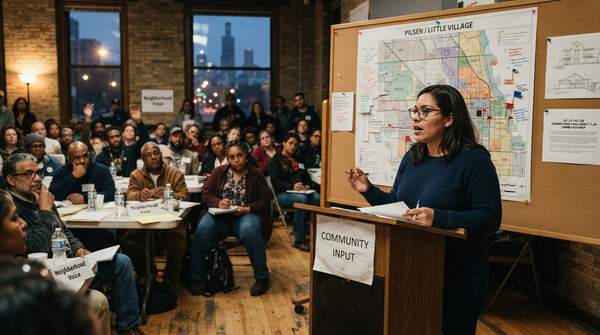
For specific parks, the District hosts community forums and listening sessions. A 2022 forum at the DuSable Museum in Washington Park was the second in a series of listening sessions meant to gather input on the future of parks and the District as a whole. The format is straightforward: after a brief presentation from the Superintendent, community stakeholders are called on to provide input and express concerns about their park, and speakers must sign up at a registration table. The District also engaged communities in smaller roundtables and scheduled additional forums at other parks, directing residents to its community feedback page for updates. Park Advisory Councils are another stakeholder group the District recognizes in these processes, though joining one is a separate undertaking from attending a forum.
Providing Feedback on Large Events in Parks
For the biggest events, the engagement obligation falls on organizers rather than the District. Under the Chicago Park District's Community Engagement Guidelines, introduced in 2022, organizers of events with 10,000 or more attendees per day must employ a community engagement plan to keep neighboring residences, businesses and other stakeholders informed about planned event operations. Organizers are also encouraged to bring benefits to the community, such as hiring local residents and securing local vendors.
The mechanics are set by the guidelines: organizers must host a publicly noticed community meeting at least 30 days prior to the event, and the meeting must be accessible to all residents, with accommodations for disabilities and language barriers. Per reporting from the 40th Ward office, organizers submit community engagement plans to the Department of Revenue, which reviews them with the Department of Community Affairs before presenting them to the Board of Commissioners for the required provisional approval. If a large festival is coming to your neighborhood park, that pre-event community meeting is your designated opportunity to raise concerns about noise, traffic, park access or cleanup before the permit is finalized.
Your Next Steps for Park Engagement
To effectively influence Chicago Park District planning, identify the specific type of initiative—budget, strategic, project, or event—and then use the corresponding official engagement channel. A funding concern belongs in the annual budget forums or online form; a vision for the park system belongs in strategic plan engagement; a specific park's future belongs in its community forum or listening session; and an event's neighborhood impact belongs in the organizer's pre-event community meeting.
Your measurable next step: check the Chicago Park District's official website for current meeting schedules, online forms, and specific project announcements relevant to your interest. The budget forums recur annually—September 2026 hosted the Fiscal Year 2027 cycle—so if you miss one, the next cycle is roughly a year away, while project forums and event meetings are announced per initiative.
Sources
- Chicago Park District Invites Chicago Residents to Provide Public Input on the Fiscal Year 2027 Budget
- Strategic Plan — Chicago Park District
- Chicago Park District Hosts Community Forum in Washington Park to Seek Valuable…
- Large Event Community Engagement Guidelines & Supplemental Information Form - 40th Ward of Chicago
- Chicago Park District Unveils the Grant Park Framework Plan
- Park District Superintendent Releases New, Five-Year Strategic Plan Building an Inclusive and… — Chicago Park District