Community Land Trusts (CLTs) are among the financially top-performing community-based organizations, according to tandfonline. Collective land stewardship can be sustainable and empowering, offering a stable foundation for families. Unlike traditional homeownership focused on individual profit, CLTs prioritize long-term affordability over speculative gains, stabilizing housing costs for residents.
However, despite their financial robustness and lasting affordability, CLTs face significant hurdles. The cap on resale profits for homeowners and the complexities of communal management challenge participants and limit the sector's growth.
Therefore, CLTs offer a powerful solution to the housing crisis. But their broader adoption and sustained impact depend on addressing these trade-offs and fostering robust knowledge-sharing within the sector.
What is a Community Land Trust?
A Community Land Trust separates the cost of land from the home. A family buys the house, then leases the land from the CLT through a long-term, often 99-year, renewable lease, as explained by the Grounded Solutions Network. Homeowners can build equity in the dwelling while the land stays under community control, preventing speculative price increases.
The approach ensures housing remains affordable for generations. The CLT holds the land in trust, removing it from the speculative market. Homebuyers pay a significantly lower price, buying only the structure, not the land. The separation creates a powerful mechanism for perpetual affordability, making homeownership accessible to low-to-moderate income families. The implication is that CLTs fundamentally redefine property value, prioritizing social benefit over market speculation.
Navigating the Nuances of Shared Ownership
Affordability benefits aside, the CLT model introduces specific challenges, especially regarding individual homeowner profit and communal governance. A significant obstacle to CLT participation is the cap on resale profits, according to Investopedia. Homeowners cannot realize the same speculative financial gains as those in traditional market-rate homes. The cap on resale profits disincentivizes some potential buyers.
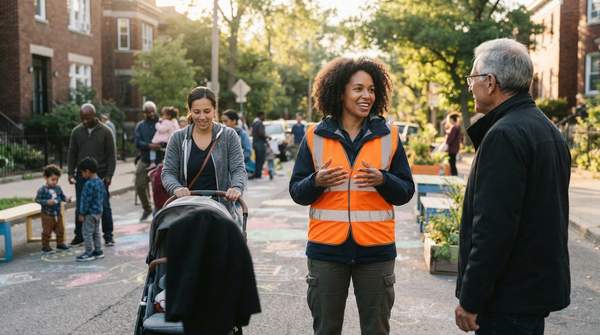
The CLT ownership structure also challenges owners to manage shared resources effectively. Differing incentives and information needs among residents complicate decision-making, unlike the straightforward management of a privately held resource, according to cambridge. Differing incentives and information needs among residents demand thoughtful governance and clear communication for smooth operations and equitable outcomes. The implication is that CLTs require a fundamental shift in mindset from individual accumulation to collective stewardship, a cultural hurdle as much as a financial one.
CLTs secure lasting affordability, but participants must weigh stable housing benefits against limited speculative financial gains and shared governance complexities. The model trades individual wealth maximization for collective, enduring community benefit.
Empowering Communities Beyond Affordability
Community Land Trusts extend their impact beyond affordable housing, serving as platforms for civic engagement and skill-building. CLT administrators enable residents and owners to manage communal resources more effectively, according to cambridge. Educational initiatives include coaching first-time homeowners on property management or training leaders in effective CLT governance.
These educational efforts foster collective responsibility, empowering residents to shape their living environments. By providing tools and knowledge, CLTs help homeowners navigate shared ownership complexities and participate meaningfully in community decisions. The approach transforms housing into a vehicle for broader community development, building social capital and resident capacity. The implication is that CLTs are not just housing providers; they are community incubators, fostering a self-reliant and engaged citizenry.
The Future of the CLT Movement
The CLT sector's sustained livelihood and future growth depend on effective information exchange and robust documentation. It requires a systematic approach to sharing useful information across individual CLTs: advocacy priorities, best practices, and strategies for macroeconomic stress, according to cambridge. Collective learning is vital for transforming isolated successes into broader, systemic advancements.
Without a centralized knowledge-sharing platform, individual CLTs often face similar challenges and develop solutions independently. The lack of a centralized knowledge-sharing platform slows progress and limits scalability. Robust mechanisms for documenting and disseminating insights ensure the entire sector can adapt to evolving market conditions and policy changes. Robust mechanisms for documenting and disseminating insights foster innovation and strengthen the CLT model's overall impact. The implication is that without a unified knowledge infrastructure, CLTs risk remaining niche solutions rather than becoming a widespread housing strategy.
The long-term viability and scalability of the CLT model thus hinge on a robust ecosystem of shared knowledge. A robust ecosystem of shared knowledge enables continuous improvement and adaptation, ensuring CLTs remain a relevant and powerful tool for addressing housing affordability challenges.
Addressing Common Questions
How can homeowners build equity in a Community Land Trust home?
Homeowners in a Community Land Trust agree to sell their home at a restricted price, maintaining affordability for future buyers. They can still realize appreciation from improvements made during their ownership, according to the Grounded Solutions Network. Realizing appreciation from improvements made during ownership allows for personal financial growth within the framework of long-term community affordability.
What kind of support do Community Land Trusts provide to homeowners?
Community Land Trusts actively support homeowners, especially in communal resource management. CLT administrators enable residents to manage shared assets effectively through education and training. Education and training include coaching first-time homeowners or developing leadership skills in governance, according to cambridge. The support provided addresses differing incentives and information needs inherent in shared ownership models.
The Enduring Value of Community Land Trusts
Community Land Trusts offer a financially robust model for housing affordability and community empowerment. They deliver lasting affordability and support residents through education and governance training, creating stable neighborhoods. Yet, the tension between organizational financial strength and capped individual homeowner profit remains a significant hurdle for broader adoption. Overcoming this requires prioritizing collaborative learning and structured knowledge sharing, centralizing research and best practices for the model's evolution and widespread acceptance.
By late 2026, as initiatives like The Center's platform for sharing unpublished CLT research expand, the sector's collective knowledge base is expected to strengthen, according to Cltweb. The strengthening of the sector's collective knowledge base will likely pave the way for more informed and adaptable Community Land Trust models across various neighborhoods, addressing evolving community needs.