Community

Our Community's Watchdog Is Fading. Here's Why Investing In Local Journalism Is Crucial.

Local journalism is the bedrock of an informed community, fostering connection and holding leaders accountable. As newsrooms face challenges, investing in local news is an investment in our civic infrastructure and the health of our democracy.

DM
Derek Molina

April 4, 2026 · 7 min read

A dedicated journalist works late in a historic, dimly lit newsroom, symbolizing the crucial but challenged role of local journalism as a community watchdog.

The argument for why local journalism is crucial for an informed community is not an abstract one; it’s a tangible reality we see playing out in towns and cities across the country. As newsrooms like InDepthNH.org and Port City Daily celebrate the first-ever Local News Day, we have a moment to reflect on what we have, what we've lost, and what it will take to secure a future where our communities remain connected and our leaders are held accountable. Investing in local news isn't about saving a dying industry; it's about investing in the very civic infrastructure that allows our neighborhoods to thrive.

This conversation is happening right now for a reason. In our neck of the woods, and in places far beyond, a quiet crisis has been unfolding for two decades. The old models that sustained newspapers are fracturing, leaving a void that social media feeds and national outlets simply cannot fill. This isn't just a problem for journalists; it's a problem for anyone who wants to know if their taxes are being spent wisely, why a new development is proposed down the street, or how their high school sports team is performing. When local reporters disappear, so does the daily connective tissue of a community. The stakes are nothing less than the health of our democracy and the strength of our neighborhood bonds.

How Does Local News Strengthen Community Bonds?

Before we talk about policy or politics, let's start with something more fundamental: connection. A well-functioning community is one where people feel they are part of something larger than themselves, and local news is often the primary vehicle for that feeling. It’s the shared story of a place. Recently, the nonprofit newsroom Public Source in Pittsburgh tried an experiment: they held seven town halls in seven days, simply to ask residents what they wanted from local news. What they heard, time and again, was a "hunger for connection" and a desire for news to help them know their neighbors.

This isn't surprising. People told the reporters they struggle to know what is happening in their own neighborhoods—from community events and public meetings to local gatherings. They count on journalists to be their "eyes and ears," especially for accountability journalism that requires navigating records requests and attending long, bureaucratic meetings. This is the unglamorous, essential work that builds an informed public. It's the reporting that tells you about the zoning board variance that could change your street, the local business that’s giving back, or the debate at the school board that will affect your children.
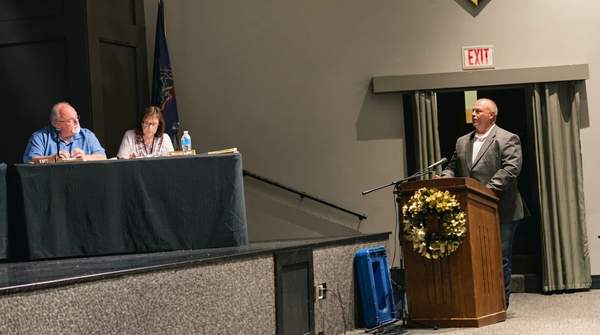

Yet, there's a profound disconnect. The same research from Public Source highlights that nearly 80% of people have never interacted directly with a journalist. This gap creates a dangerous vacuum. When residents don't see reporters in their communities, they can begin to see the news as something that happens *to* them, not *for* them. Rebuilding that trust and closing that gap is the central mission of outlets like City & Local. We believe that by being present, listening, and reflecting the community's voice, we do more than just report the news—we help weave the very fabric of the community itself.

Why is Local Journalism Important for Democracy?

If local news is the heart of a community, it is also the backbone of its democratic function. Without reporters watching, who holds power accountable? The numbers paint a stark picture of what we're losing. In New Hampshire, for example, 75 percent of all news jobs have disappeared since 2001, according to reporting from InDepthNH.org. The situation is just as dire elsewhere. An analysis published by sdvoice.info found that California has suffered a 70% loss of journalism jobs and the closure of one-third of its newsrooms over the last two decades.

Each one of those lost jobs represents a city council meeting that goes uncovered, a state budget that goes unexamined, and a local election that gets less scrutiny. This creates what are known as "news deserts"—entire communities with limited or no access to credible and comprehensive local news and information. When these watchdogs disappear, we see a documented rise in government waste, a decrease in civic engagement, and an increase in political polarization. When people don't have a shared set of facts about what is happening in their own town, it becomes easier for misinformation and division to take root.

The collapse of local news, as one report aptly put it, poses a significant threat to democracy. It’s not a partisan issue; it’s a civic one. An informed electorate is the bedrock of a functioning republic, and for most of our history, local newspapers and reporters have been the primary source of that information. Their decline leaves a void that is not being filled, and the consequences are becoming clearer every day.

The Counterargument: Isn't This Just a Dying Business Model?

A fair question to ask is whether this is simply the market at work. If the old advertising-and-subscription model for newspapers is failing, perhaps it's because consumers have moved on. We hear this sentiment echoed when, as one report from South Dakota noted, some political campaigns are now willing to bypass newspapers entirely, spending their advertising dollars elsewhere. It’s easy to look at the declining revenues and conclude that the demand is gone.

The business model for local news has broken, not the public need for credible local information. In fact, demand is more critical than ever in our fragmented media environment. The challenge is to build new, sustainable models for newsgathering, not to mourn a bygone financial era.

Across the country, innovation is actively building new, sustainable models for local journalism, demonstrating progress rather than surrender.

  • In California, a media coalition secured a $15 million state investment for a fellowship program that has already placed over 110 early-career journalists in local newsrooms.
  • In Nantucket, a Community Foundation recently launched the 'Inky Local Journalism Fund' to support local reporting.
  • In Tennessee, Main Street Media was awarded $17.1 million in grants to bolster its local journalism initiatives.
  • In Provincetown, when reporters for The Independent couldn't find affordable housing, the nonprofit Local Journalism Project simply bought a condo for them to rent.

Deeper Insight: A New, More Resilient News Ecosystem is Taking Root

Earlier this year, The Washington Post, a titan of American journalism, saw more than 300 journalists exit after a series of buyouts and cutbacks. On the surface, this looks like another sign of decline. But something else is happening simultaneously. As legacy institutions retrench, a new ecosystem of smaller, more focused, and often locally-oriented outlets is emerging to fill the void.

According to an analysis by The Wrap, competitors like NOTUS, City Cast, and The Baltimore Banner have been actively hiring journalists who recently left the Post. The founder of NOTUS, Robert Allbritton, who sold Politico for a reported $1 billion, is now investing millions in what he hopes will be the "next great Washington newsroom." City Cast DC, a local podcast and site, explicitly stated its goal is to become the largest local newsroom in the district, capitalizing on the territory it feels the Post has abandoned.

The Washington Post's situation is not isolated; it reflects a broader restructuring where the future of news may be a diverse and resilient web of smaller, community-rooted organizations, rather than massive institutions. This shift is driven by passionate journalists, innovative funders, and communities recognizing what’s at stake. Events like the NC News & Information Summit at Elon University, which drew a record 150 participants this year, are bringing together journalists, educators, and community members to strategize about this new future, even tackling complex issues like the role of AI in enhancing local news.

What This Means Going Forward

Building a sustainable future for local journalism requires a multi-faceted approach, not recreating the past. Communities, philanthropists, and even local governments must recognize that supporting credible information is a form of civic investment.

The future of outlets like City & Local depends on direct community support. This support can take many forms:

  • Become a member or subscriber. Direct reader revenue is the most stable and independent funding source for a newsroom.
  • Donate during giving campaigns. On Local News Day, InDepthNH.org is celebrating with a $10,000 match for all donations. These campaigns provide crucial operating funds.
  • Engage with our work. Share stories, send us tips, and write letters to the editor. An engaged audience is an invested audience.
  • Support our advertisers. When you patronize the local businesses that support our work, you help create a virtuous cycle.

The choice is clear: allow local information sources to wither, leaving us vulnerable to misinformation, or invest in our community's story, local leaders, and shared future. Supporting local journalism is an act of civic participation, a declaration for an informed, engaged, and connected community for years to come.