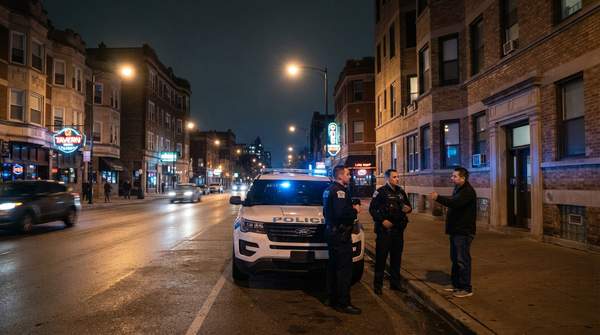
In a grim discovery early Sunday, 18-year-old Cristian Jose Rojas Barrios was found shot in the chest and leg, hands tied behind his back, in a Chicago bathtub. This horrifying incident reveals a disturbing escalation in the city's gun violence, moving far beyond random street conflict. While Chicago reeled from a night of widespread shootings, with at least 16 people shot, these individual incidents expose a spectrum of brutality and impact that statistics alone cannot capture. Therefore, Chicago faces an urgent need to address both the systemic causes of broad gun violence and the specific factors enabling such targeted, extreme acts of depravity.
Incidents Across the City
That same night, violence touched multiple neighborhoods and age groups. Four teenagers were injured in Little Village around 3 a.m. A 31-year-old victim was shot twice in the chest and twice in the arm, found in fair condition at Mt. Sinai Hospital, while a 32-year-old from the same incident suffered a leg wound and went to Stroger Hospital, both according to ABC7 Chicago. Meanwhile, a 29-year-old man, shot multiple times, remains in critical condition at Mount Sinai Hospital, as reported by the Chicago Sun-Times. These varied outcomes highlight the unpredictable and devastating nature of gun violence, where similar attacks yield vastly different survival rates.
Escalation to Targeted Brutality
The discovery of Cristian Jose Rojas Barrios, tied and executed, as reported by the Chicago Sun-Times, signifies a chilling shift. This isn't just street crime; it's calculated brutality. The sheer volume of overnight shootings, with at least 16 people shot, can unfortunately overshadow this disturbing trend towards execution-style violence. Such incidents suggest a move from random acts to premeditated cruelty, demanding a deeper look into the motives behind these attacks.