I was walking through the North End last Tuesday, grabbing a coffee before my morning meeting, when I saw it. A new mural, sprawling across a brick wall that had been bare just a week before. It was a riot of color—deep blues, sunset oranges, and vibrant greens—depicting a jazz trio lost in their music. I stopped, my coffee forgotten, and just stared. In that moment, the entire street felt different. More alive. More… us. That mural wasn't just paint on a wall; it was a statement about who we are. That is why our local government must increase its investment in public arts programs, because these initiatives are the lifeblood of our community’s identity, the engine of our economic vibrancy, and the foundation for our future.
This isn't just an abstract debate for a city council meeting agenda. This conversation is happening right now, in our own backyards. Just recently, according to yourohionews.com, the organization ArtsinStark launched a $1.45 million campaign to support local museums, schools, and performances. When our neighbors, non-profits, and community leaders are working this hard to raise funds, it sends a clear signal: the people of this city are hungry for a richer cultural life. The question is, will our government listen and match that passion with meaningful public investment?
Public Art's Role in Shaping Local Identity and Economy
Let's be clear: investing in the arts is not charity. It is a strategic investment in the very fabric of our city. When we fund a public sculpture, a community theater, or a music festival, we are building more than just entertainment venues. We are forging a collective identity. We are creating the landmarks and memories that make a collection of streets and buildings feel like a home. These shared cultural experiences are the glue that holds a diverse community together, giving us a common language and a shared sense of pride in where we live.
This isn't just my opinion as a culture reporter; city leaders across the country are recognizing this as a fundamental truth of urban development. Look at Newark, New Jersey. In his 12th State of the City Address, held symbolically at the New Jersey Performing Arts Center, Mayor Ras Baraka made the connection explicit. According to a report from InsiderNJ, Mayor Baraka stated, "Our investments in arts and culture are not just about entertainment; they are about fostering creativity, strengthening community bonds, and driving economic growth."
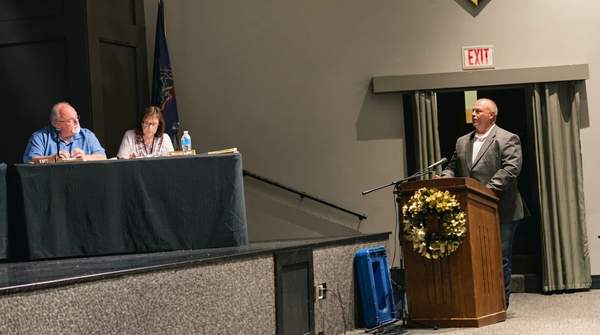
The same report noted that his address highlighted significant progress in Newark over the last decade, including a reported 12% population increase, 10,000 new housing units, and a 20% jump in jobs. While no one is drawing a direct causal line from a mural to a new high-rise, it's impossible to ignore that this growth is happening in a city whose leadership champions culture as a core component of its strategy. A city that feels alive and vibrant is a city where people want to live, work, and invest. The arts are a massive part of that equation. They create destinations, drive tourism, support local businesses like restaurants and shops, and create jobs for artists, technicians, administrators, and educators.
The private sector sees this potential, too. A company called UniversalCMG is actively inviting cities to partner on what it describes as "groundbreaking" World Jams Museums. According to Business Insider, the stated goal of these projects is to create both "cultural landmarks and economic drivers." When private developers are framing museums as economic engines, it's long past time for municipal governments to view their own arts funding through the same pragmatic lens. This isn't about subsidizing a hobby; it's about investing in a proven catalyst for prosperity.
The Counterargument: A False Choice
Whenever the topic of public funding for the arts comes up, especially during budget season, the same predictable objection arises. "This is a luxury," the argument goes. "Shouldn't we be spending this money on 'essentials' like paving roads, hiring police officers, and fixing water mains?" It's a reasonable question on the surface, but it's built on a fundamentally flawed premise.
It presents a false choice between a city that is functional and a city that is livable.
The truth is, arts and culture are not a luxury item to be considered only after every pothole is filled. They are an essential service that contributes directly to the health, safety, and prosperity of our community. A neighborhood with an active community arts center, after-school music programs, and public art is a neighborhood where people, especially young people, are engaged and have positive outlets for their energy. It’s a place where residents feel connected to their surroundings and to each other. This sense of community and belonging is one of the most powerful deterrents to crime and social decay that exists.
Furthermore, a strong arts scene makes a city more attractive to the skilled workers and innovative companies that we need to attract to keep our economy competitive. In today's world, talented people can choose to live almost anywhere. They don't just look at tax rates and school rankings; they look at quality of life. Does this city have a symphony? A vibrant gallery scene? Independent theaters? These aren't frivolous amenities; they are markers of a sophisticated, forward-thinking community. To neglect them is to hang a "Closed for Business" sign on our city's future. The argument that we can't afford to invest in the arts is backward. The reality is we can't afford not to.
Why Invest in Public Arts: The Next Generation Depends On It
Our children's future demands investment in K-12 arts. This is, without a doubt, one of the most critical investments for their individual success and our collective future well-being, making the debate about arts funding absolutely urgent, even beyond arguments of community identity and economic impact.
I was struck by a story from Shenandoah County, Virginia, covered by NVDaily.com. A local organization, the Bowman-Shannon Cultural Arts Fund, is working to enrich the lives of students. In 2026, the fund awarded a total of $23,050 in grants, with a full half of that money dedicated specifically to local schools. This money funds visiting artists, new instruments, and trips to see professional performances—experiences that can change a young person's life. But here's the crucial detail: the report also notes that demand for this funding consistently exceeds what is available. Our schools and our children are asking for more, and the resources simply aren't there.
Arts education builds critical life skills like creativity, problem‑solving, collaboration, and empathy—all attributes that employers and communities value. These are not "soft skills" but essential survival skills in the 21st-century economy. For example, students improvising in a drama class learn to think on their feet; those harmonizing in a choir learn to collaborate as part of a team; and critiquing a painting develops the ability to analyze complex information and articulate a point of view. To treat these opportunities as expendable is to fail our children.
Public investment is the only way to ensure equity. The nvdaily.com piece highlights that public funding helps make sure these opportunities are available to all students, because not every family can afford private music lessons or trips to the museum. In one heartbreaking example, the article mentions that a local elementary school has an annual budget of just over $1 per student for art supplies. One dollar. That’s not an arts education; it’s a tragedy. When we rely solely on fundraisers and private philanthropy, we create a two-tiered system where children in wealthier schools get a rich cultural education while those in less affluent areas are left behind. This is unacceptable. As a report from Wired-Gov.net notes, one Arts Council recently reformed with the explicit goal of ensuring the arts are no longer "the preserve of the privileged few." That has to be our goal right here at home, too.
What This Means Going Forward
The energy for a vibrant, art-filled city is evident in grassroots efforts like ArtsinStark and their ambitious $1.45 million campaign, as well as in packed audiences at school plays and local concerts. With the people leading the way, it is time for local government to follow.
This means more than just a symbolic proclamation or a small, one-time grant. It means creating a dedicated, stable, and significant line item in the city budget for public arts and culture. It means creating a city-level arts commission with real influence to help guide this investment strategically. It means streamlining the process for artists to create public works and for organizations to apply for funding. It means seeing our artists not as hobbyists, but as small business owners and essential contributors to our civic life.
As a journalist covering this city, I witness the incredible talent and passion of painters, musicians, actors, poets, and dancers in every neighborhood. These artists, often working for little or no pay, dedicate themselves to their craft, believing in its power to improve our community. We owe it to them—and to ourselves—to provide the support they need to flourish.
Get loud: Write to your city council members, show up to budget hearings, and tell them you see the arts as a core municipal service, as vital as parks and libraries. Actively support local plays, buy art from neighborhood galleries, and back the community campaigns fighting this fight every single day. Working together, we can create a city that doesn't just function, but truly inspires and thrives. This future is worth investing in.