Community

How to Participate in Local Government Meetings: A 2026 Guide

At a recent board meeting in 2026, over 200 people participated remotely, while only four members of the public attended in person, according to CalMatters .

SN
Sophie Nguyen

April 12, 2026 · 5 min read

Diverse citizens participating in a 2026 local government meeting, both in-person and remotely via digital screens, showcasing modern civic engagement.

At a recent board meeting in 2026, over 200 people participated remotely, while only four members of the public attended in person, according to CalMatters. This stark contrast illustrates a dramatic shift in how residents engage with their local government, favoring digital platforms for civic discourse. Virtual attendance options mean more individuals can observe city council sessions, planning commission reviews, and school board discussions from home, seemingly expanding democracy beyond physical boundaries.

However, despite this expanded access, local governments provide more ways for citizens to attend meetings, but the mechanisms for truly impactful participation often remain restrictive or misunderstood. Logging into a virtual session does not automatically translate into effortless influence on policy or direct voice to decision-makers. A significant gap exists between the opportunity to observe and the actual ability to contribute meaningfully.

Citizens must proactively navigate both technological access and procedural requirements to ensure their voices are heard. Otherwise, their participation risks being reduced to a mere formality that undermines local democracy. Understanding the intricacies of how to participate in local government meetings in 2026 is crucial for anyone seeking to make a real difference, moving beyond passive observation to active, informed engagement.

The Evolving Landscape of Public Meetings

Public meetings now look dramatically different. The July 2026 board meeting, with over 200 remote attendees and just four in-person, as CalMatters reported, confirms a strong citizen preference for virtual engagement. This allows easier access, freeing residents from travel and rigid schedules.

Legislative actions mirror this hybrid trend. Senate Bill 544, for example, initially allowed state boards to meet remotely while ensuring in-person options for citizens. Later amendments, however, mandated that most board members attend at least half their yearly meetings in person. This creates a clear dual standard: citizens increasingly engage remotely, while officials remain tied to physical locations.

Technology also pushes hybrid models forward. Modern video conferencing, as CivicPlus notes, works across platforms, including assistive tech and mobile devices. Features like live closed captioning broaden accessibility. Yet, despite these advances and the public's clear preference for remote options, a disconnect remains in how officials and citizens value physical attendance.

How to Participate: Navigating Formal Procedures

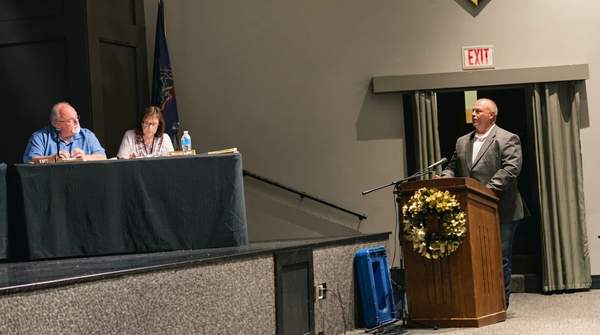
Direct engagement with local government demands strict adherence to formal procedures, even virtually. In Jacksonville, Florida, for instance, citizens can comment at Council meetings and public hearings, but only under specific mandates.

Speakers must first fill out a request card. This administrative gatekeeper registers participants, but it also acts as a barrier for those unfamiliar with the process or wishing to speak spontaneously.

Time limits are strict. Jacksonville speakers get just three minutes, demanding concise, prepared remarks. In Park Ridge, Illinois, individuals must approach a podium, speak into a microphone, and state their name and address, per City Council Procedures. These hurdles, designed for in-person interactions, mean direct influence still requires navigating traditional formats. Expanded access becomes passive observation for those unprepared for these formal steps.

Beyond Formalities: The Pitfalls of Superficial Engagement

Even with hundreds participating remotely, local governments often cling to an outdated paradigm. Direct influence still requires navigating in-person hurdles like podiums and speaker cards, reducing expanded access to mere observation. The very mechanisms meant for public participation, like strict time limits, clash with the 'informal and often unintentional interactions' that truly drive successful civic engagement.

Park Ridge, for example, mandates all Council comments come from a podium. This physical requirement creates a disconnect for remote participants, who watch but lack immediate interaction. While dial-in options exist for audio-only meetings, as CivicPlus notes, these feed into the same rigid, time-limited comment periods, stifling genuine dialogue.

Officials often confuse 'participation' with 'information sharing,' a misinterpretation that damages local democracy and eroding credibility, according to the National Civic League. This misunderstanding builds processes around brief inputs, not dynamic exchanges. The League emphasizes that true participation thrives on informal interactions 'in between' strategic processes, not just pre-designed tools. By relying solely on structured comment periods, local governments miss opportunities for genuine civic impact and stifle dialogue, offering an illusion of engagement rather than real influence.

Maximizing Your Impact in Local Government Meetings

To truly influence local government, move beyond observation. Strategically engage by preparing thoroughly: review the agenda, understand topics, and identify key decision-makers. Context allows targeted, persuasive comments, avoiding vague statements within tight time limits.

Understand public comment rules, including registration and time limits. If Jacksonville limits speakers to three minutes, practice ensures a concise, impactful delivery. Maximize your brief podium opportunity, virtual or physical.

Amplify your voice by engaging officials outside formal meetings. Email or call council members and commissioners before a session for deeper discussion. These informal interactions build relationships and ensure your perspective is understood before a vote, often influencing outcomes more effectively than a single public comment.

Finally, persistence and collaboration are crucial. If an issue isn't resolved, continue engaging. Form or join community groups to pool resources and amplify collective voices, making it harder for local governments to ignore concerns. This sustained, multi-faceted approach transforms passive observation into active, impactful participation.

What are the rules for speaking at a town hall meeting?

Rules for speaking at town hall meetings typically involve signing up in advance or filling out a speaker card upon arrival. Speakers are often required to state their name and address for the record, and adhere to strict time limits, which can be as short as two or three minutes per person. Some municipalities, like Park Ridge, require all comments to be made from a designated podium.

How do I find out when local government meetings are happening?

Local government meeting schedules are usually posted on the official city or county website. Most municipalities maintain a public calendar that lists upcoming council meetings, committee sessions, and public hearings, often with associated agendas and meeting packets available for review. Many also offer email subscription services for meeting notifications, ensuring citizens receive timely updates directly.

Can I submit comments for a local government meeting online?

Many local governments now offer options for submitting comments online, especially for hybrid or virtual meetings. This can include dedicated online forms, email addresses for public input, or even direct comments through virtual meeting platforms during designated periods. Some systems allow for written comments to be read aloud during the meeting or distributed to officials beforehand.What topics are discussed in local government meetings?

Local government meetings cover a wide array of topics directly affecting the community, including zoning changes, budget allocations, public safety initiatives, infrastructure projects like road repairs, and local ordinances. Discussions often involve community development plans, environmental regulations, and local service provisions such as waste management or park maintenance, all of which directly impact residents' daily lives.

If local governments fail to move beyond rigid formalities and embrace genuine, dynamic engagement, meaningful public input will likely decline, reducing citizen participation to a mere illusion by 2026.