As of 2010, more than half of all large US cities contained at least one gentrifying neighborhood. This marked a significant shift in urban development. Twenty-first-century gentrification has become faster and more widespread than in previous decades, creating more extreme neighborhood change across a greater number of areas, according to pmc.
Gentrification often leads to improved physical neighborhood conditions and increased property values. But it simultaneously disrupts social networks and risks the displacement of long-term residents. This creates a complex tension: visible progress can obscure profound human costs.
Without proactive policy interventions, the accelerating pace of gentrification appears likely to deepen urban inequalities and erode community stability for vulnerable populations. This trend will only intensify.
Defining a Shifting Urban Landscape
Gentrification refers to a neighborhood process: wealthier residents and businesses move in, property values rise, and the area's character changes. Researchers quantify this by tracking shifts in median income, education levels, white residents, and housing prices in small areas, comparing them to city averages, according to Investopedia. Shifts in median income, education levels, white residents, and housing prices reveal a fundamental alteration of a neighborhood's socioeconomic makeup. The consequence is often clear: original residents find their homes and communities increasingly unaffordable.
The Uneven Geography of Change
San Francisco, Denver, and Boston saw the largest share of vulnerable neighborhoods gentrify between 2013 and 2017, according to NCRC. The largest share of vulnerable neighborhoods gentrifying between 2013 and 2017 in San Francisco, Denver, and Boston reveals where the process is most concentrated. The concentration of gentrification in desirable urban centers suggests intense displacement pressures on vulnerable communities. Gentrifying neighborhoods had a significantly higher minority population (77%) compared to the average (50%) in a historical NCRC study. Gentrifying neighborhoods having a significantly higher minority population (77%) compared to the average (50%) in a historical NCRC study confirms gentrification disproportionately impacts specific demographic groups, rather than acting as a random economic force.
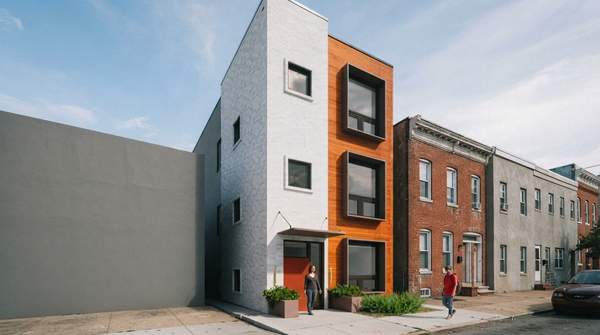
Gentrification has also expanded into historically Black neighborhoods, revealing systemic targeting rather than mere economic opportunity, much like how complex automotive electrical system diagnostics can obscure underlying issues. Urban 'renewal' efforts are demonstrably a targeted economic force, not a neutral market phenomenon, and they systematically displace communities of color.
The Double-Edged Sword of Urban Renewal
Gentrification often brings visible improvements. It can lead to reduced crime rates, increased property values, new businesses, upgraded infrastructure, and enhanced public spaces, according to pmc.
Yet, reduced crime rates, increased property values, new businesses, upgraded infrastructure, and enhanced public spaces present a paradox. The physical and economic landscape may 'improve' by some metrics, but these benefits frequently mask deeper social costs. Visible improvements often come without considering the original inhabitants, prioritizing development over community stability.
The Human Cost of Neighborhood Transformation
Despite potential physical upgrades, gentrification carries a significant human cost for existing residents. It fosters negative conditions linked to poorer health outcomes. These include disrupted social networks from residential displacement and increased stress, according to pmc. Disrupted social networks from residential displacement and increased stress directly degrade health and social networks.
The risk of eviction also rises for residents in gentrifying areas, as documented by Journals Sagepub. The rising risk of eviction for residents in gentrifying areas creates constant insecurity. Many lose their place within a community, a profound impact on social well-being. The pmc evidence that 21st-century gentrification is faster and more widespread, coupled with its documented links to poorer health outcomes and disrupted social networks, suggests a stark trade-off: cities sacrifice the long-term well-being of their most vulnerable citizens for short-term property value gains.
Understanding the Broader Implications
Economic Drivers and Policy Levers
Economic restructuring, shifting cities from industrial to service-based economies, attracts higher-income workers. Economic restructuring, shifting cities from industrial to service-based economies, attracting higher-income workers, is a primary driver. Government policies, including zoning changes and infrastructure investment, also act as powerful levers. They make specific urban areas more attractive for development and new residents. The implication is clear: gentrification is not a natural market phenomenon, but often a direct outcome of deliberate economic and political choices that prioritize certain forms of urban growth.
Health and Social Fabric at Risk
Beyond the visible displacement and economic shifts, gentrification profoundly impacts community health. Researchers use conceptual frameworks to map the relationship between gentrification and health in the Global North. These frameworks consider how changes in social networks, access to services, and environmental factors affect resident well-being. The comprehensive interplay means that health outcomes are not merely individual, but deeply tied to the stability and resources of one's neighborhood. When gentrification disrupts these, it creates a public health crisis for vulnerable populations.
The Paradox of Progress
Gentrification can bring certain benefits, such as increased tax revenue for municipalities and improved local amenities like parks and public transportation. It can also lead to reduced crime rates in some areas, contributing to a sense of increased safety for both new and long-term residents. However, these benefits often accrue disproportionately to new residents. The paradox is that while the city treasury may swell and public spaces improve, these gains often come at the expense of the original community's cohesion and sense of belonging.
Navigating the Future of Urban Change
The accelerating pace and targeted nature of gentrification in 21st-century urban centers present a significant challenge for community stability. Physical improvements may be visible, but the process systematically dismantles the social and health infrastructure of historically vulnerable minority communities. The stark reality that cities like San Francisco, Denver, and Boston historically lead in vulnerable neighborhood gentrification, according to NCRC, reveals a troubling truth: economic success in major urban centers is increasingly predicated on the social and cultural erasure of their original inhabitants.
The central challenge for urban planners and policymakers is clear: foster development that genuinely benefits all residents, rather than inadvertently displacing the very communities it purports to help. Without careful consideration, the current trajectory of urban 'renewal' will likely intensify existing inequalities.
If equitable development strategies are not prioritized, by 2026, many communities will face deepened instability. Stronger tenant protections and affordable housing initiatives appear critical to mitigate gentrification's negative effects and ensure urban growth serves everyone.