If a sculpture, mural, or artwork in Chicago's Public Art Collection is damaged, your first move depends on what you're looking at. For general graffiti or vandalism, call 311 or submit a request online. For anything more specific—structural damage, significant wear, or a question about a piece's maintenance status—contact the city's Department of Cultural Affairs and Special Events (DCASE) directly at publicart@cityofchicago.org. Getting the channel right the first time gives your report the best chance of reaching the people who can actually act on it.
Understanding Public Art Damage: Graffiti vs. Conservation Needs
"Damage" covers two very different situations, and Chicago handles them through different routes. The first is surface defacement—graffiti sprayed or scrawled on a piece of public property. Alderman Ervin's 28th Ward office, which publishes a guide to the city's graffiti hotline, describes graffiti as something that "can often deface public and private property, creating safety concerns and lowering community morale," and encourages residents to report it promptly so crews can schedule cleanup.
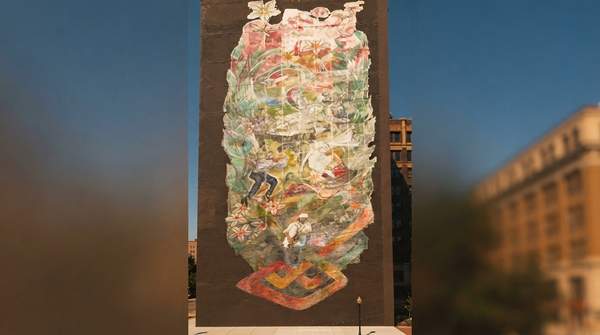
The second situation is subtler: a sculpture with a cracked or missing element, a mural peeling from weather exposure, or a piece that simply looks neglected. These are conservation and maintenance concerns rather than simple vandalism, and they require the specialist department that cares for the city's art collection rather than a cleanup crew. Mixing the two up doesn't just slow your report down—it can send it to a team unequipped to assess the problem.
Who Manages Chicago's Public Art?
DCASE runs the Chicago Public Art Program and is dedicated to the stewardship of the city's Public Art Collection. According to the city's own program documentation, since the Percent for Art Program began in 1978, hundreds of sculptures, murals, paintings, prints, stained glass, and photographs have been donated, commissioned, or purchased for the collection. Some sit outdoors, others in semi-enclosed settings, and others indoors in public spaces.
That collection includes many of the works you'd recognize on sight: The Picasso at the 911 Center, Cloud Gate and Crown Fountain in Millennium Park, Chagall's Four Seasons, Jean Dubuffet's Monument with Standing Beast, and Lorado Taft's Fountain of Time, among others listed by the program.
One important boundary: this guide covers art in the City of Chicago's Public Art Collection. Artwork on private property, or pieces managed by other entities such as the Chicago Park District, the CTA, or Chicago Public Schools, falls under separate jurisdictions, and reporting routes for those works differ.
Public Art Damage Reporting: A Quick Decision Guide
Use the framework below to classify what you're seeing and route your report accordingly. The classification step matters: graffiti is a surface problem a city crew can remove, while structural damage or conservation concerns need the department that manages the collection.
| What you observe | Category | Reporting channel | What to include |
|---|---|---|---|
| Graffiti or surface vandalism on a public artwork | General defacement | Call 311 or submit a request online at the city's 311 portal | Location, type of property, and a brief description or photo if available |
| Structural damage, significant wear, or a maintenance-status question about a piece in the collection | Art conservation issue | Email DCASE at publicart@cityofchicago.org | Location, description of the damage, and photos where possible |
The core distinction is this: if the problem is something a graffiti removal team can handle, use 311. If assessing the problem requires knowledge of the artwork itself, email DCASE. When in doubt, reporting through either channel is better than not reporting at all—accurate information helps the city direct your concern, and 311 reports can be forwarded to the right department.
Reporting Graffiti and Vandalism via Chicago 311
For graffiti, the 311 system is the city's intake channel, and reporting is free for Chicago residents. You can call 311 or submit a request through the city's 311 web portal. The 311 system's own service description emphasizes that "Chicagoans are the eyes and ears of their neighborhoods," and that as residents report more issues, city departments can plan and deliver services more efficiently.
The current web forms and app allow you to submit detailed information, photos, and locations that, in the 311 system's words, "inform and better prepare service crews even before they arrive on the scene." Once a graffiti report is filed, removal teams assess the damage and schedule cleanup, according to the 28th Ward office's guide, which also urges prompt reporting to prevent the graffiti from spreading or encouraging further vandalism.
Contacting DCASE for Art Conservation and Maintenance Issues
When the issue goes beyond surface defacement, DCASE is the responsible body. The department manages the Public Art Program and, per its program guidelines, handles new commissions as well as the conservation and maintenance of the existing collection. For questions about a specific piece of art—whether you've spotted damage or you want to know about its maintenance status—the city's guidance is direct: "For more information or questions please email publicart@cityofchicago.org."
That email address is the documented contact for public art issues within the collection. It's worth noting that the city's published materials do not specify what information a resident should include in such an email or what response time to expect, so don't interpret a delayed reply as a sign your concern was misplaced. What is clear is that this is the designated channel for damage reports and maintenance inquiries about collection pieces.
What to Include in Your Report
For a 311 graffiti report, the guidance is explicit. Citizens provide the location, the type of property, and a brief description or photo if available. The 28th Ward office stresses that accurate reporting helps city crews respond efficiently and ensures the correct areas are addressed. Take a moment to note the nearest intersection or address before you file, and attach a photo if you can.
For a DCASE email, the city hasn't published a required checklist, but the same principles apply from the 311 guidance: give the location, describe what you observed, and attach photos where possible. Naming the artwork helps—many pieces in the collection are well-known, and DCASE staff manage hundreds of works across outdoor, semi-enclosed, and indoor settings, so specificity on your end saves a round of follow-up questions.
Also keep in mind the scope limits of this route. If the damaged piece sits on private property or belongs to another agency like the Chicago Park District, CTA, or Chicago Public Schools, DCASE is not the responsible party, and a 311 report may only be a starting point.
Ensuring Chicago's Public Art Endures
Residents should promptly report public art damage to the appropriate Chicago municipal department to contribute to the preservation of the city's cultural assets. The decision is straightforward: 311 for graffiti, publicart@cityofchicago.org for conservation and maintenance questions about the Public Art Collection.
You'll know your report landed when it's acknowledged by the relevant department—a 311 service request confirmation or a DCASE email response. That acknowledgment is the measurable next step; the city's published information does not guarantee a specific resolution timeline, but an acknowledged report is the documented starting point for the collection's care.