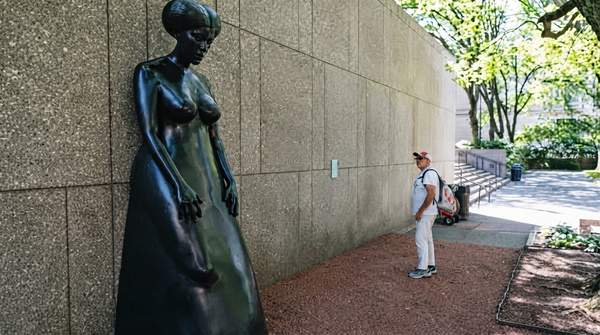
Chicago's public art is not maintained by happenstance. Two official systems govern much of it: the City of Chicago's Department of Cultural Affairs and Special Events (DCASE), which runs the Chicago Public Art Program and the citywide collection, and Chicago Public Schools (CPS), which owns and oversees an extensive fine art collection spread across its buildings. If you encounter a mural, sculpture, or painting in the city, these two bodies are the most likely stewards, and each keeps its own records you can consult. Here is how the system works and how to investigate a piece you find.
Understanding Chicago's Public Art Landscape
Chicago's public art is divided among several managing entities, but the two with formal, published policies are the city government and the school district. DCASE manages the Chicago Public Art Collection, the hundreds of artworks already installed across city buildings and public spaces. The department also decides whether proposed donations of artwork are accepted, where donated works are installed, and how best to display them. Separately, the CPS Board owns a collection of fine art distributed throughout the district's elementary schools, high schools, and administrative facilities across the city.
That division matters when you see a piece of art. A sculpture in front of a library or police station likely falls under the city program. A historic painting hanging in a school hallway belongs to the CPS collection. Other artworks in Chicago may be managed by different organizations, such as the Park District or private owners, so location is your first and most reliable clue about who is responsible.
DCASE and the 'Percent for Art' Ordinance
New city-owned public art is funded largely through the Percent for Art ordinance. Under the ordinance, 1.33% of the construction budget for building or doing a major renovation of a City-owned or City-financed building, structure, or certain outdoor improvements is set aside to commission art at that site. Eligible buildings include libraries, police stations, fire houses, senior centers, and others.
That means new public art tends to appear wherever the city is building. Each commissioned piece is tied to a specific construction project, so the art you see near a new city facility was likely funded by that project's budget rather than a separate arts allocation.
The commissioning process also involves residents. According to the city's guidelines, upcoming projects trigger a community forum: notice of the date, time, location, and purpose is posted on the City of Chicago website and sent to the local alderman and identified community interests. At that first forum, program staff and government representatives share details about the project, including its location, purpose, general configuration, and anticipated schedule, while community members describe their neighborhood's history, local cultures, concerns, and aspirations. Note that this input process applies to upcoming projects, not to general maintenance of existing artworks.
Preserving the City's Collection: DCASE's Maintenance Efforts
Commissioning art is only half the system. DCASE is also responsible for maintaining the hundreds of artworks already installed as part of the Chicago Public Art Collection. Conservation and maintenance are ongoing responsibilities, not one-time events, so the pieces you pass daily are periodically assessed, repaired, and preserved by the same department that commissions new work.
DCASE's donation review process is part of preservation as well. Because the department determines whether to accept proposed donations and where and how to install them, new additions to the collection are screened with their long-term care in mind. The city's guidelines describe this process but are not rigid legal standards, so outcomes can vary by project.
The Chicago Public Schools' Art Collection
CPS manages its collection under a formal board policy covering acquisition, ownership, conservation, and maintenance of the district's works of art. The current policy was adopted after rescinding an earlier version, and the district's stated rationale was to broaden its scope to include a clearer focus on equity and to ensure the fine art collection has oversight from the appropriate CPS departments.
The policy also requires regular reporting on the collection's condition. According to the district's policy, that report is cumulative and provides information on new acquisitions and deaccessions, the present location and state of each work as determined by the latest facilities assessment, any losses or thefts or insurance claims, an equity audit, and recommendations for relocation, repair, appraisal, or maintenance. The district also maintains a digital catalogue of all works in the collection, including high-resolution photography, requires schools to protect artworks during renovation or construction projects, and develops emergency plans for preserving or recovering the collection in disasters.
Investigating Chicago Public Art: A Decision Framework
Use the matrix below when you encounter an artwork in Chicago and want to know who manages it and where to start looking for its history. The framework works by categorizing an unknown artwork based on its location and type, then matching that to the likely governing authority and its public information resources.
| Step | If you observe… | Likely steward | Where to look next |
|---|---|---|---|
| 1. Identify the location | Art at a library, police station, fire house, senior center, or other city-owned building or outdoor improvement | City of Chicago (DCASE) | City of Chicago website, including notices about Percent for Art projects and community forums |
| 2. Check the setting | Fine art inside an elementary school, high school, or CPS administrative facility | Chicago Public Schools | CPS policy documents and the district's digital catalogue of the collection, which includes high-resolution photography |
| 3. Narrow the funding origin | Recent art at a newly built or renovated city facility | City of Chicago (DCASE) | Look for the commissioned piece's link to that building project under the 1.33% ordinance |
| 4. Rule these two out | Art in a park or on private property | Another entity (not covered here) | Contact the property owner or managing organization directly |
The reasoning path is straightforward: location tells you the steward, and the steward tells you the record. A school setting points to CPS, whose policy requires a cumulative report on each work's location and state plus a catalogued digital record. A city building points to DCASE and the Percent for Art program, where community forum notices for upcoming projects are posted on the city's website. This is an educated guess, not a guarantee, since the two entities covered here do not manage all public art in Chicago.
Engaging with Chicago's Public Art: Your Next Steps
When encountering a public artwork in Chicago, first identify its location, such as a school or a public building, to determine if DCASE or CPS is the likely steward, then consult their official resources for more information. A sculpture near a fire house points you toward the city's Percent for Art program; a painting in a school directs you to the CPS digital catalogue. In either case, you have a concrete starting place rather than a dead end.
Your measurable goal is the successful identification of the managing entity, DCASE or CPS, and retrieval of initial information about a specific artwork from official city or school district websites. Achieving that confirms the framework worked, and each successful lookup deepens your picture of the civic infrastructure, dedicated funding, and formal oversight, that keeps Chicago's public art in place.