Ask an outsider to name Chicago food and you'll likely hear "deep-dish pizza." But locals know the city's signature table runs wider — a plantain-based sandwich born in Humboldt Park, a seven-topping hot dog with Depression-era roots, thin-crust tavern-style squares that many Chicagoans actually prefer, and an ice cream shop that has scooped since 1926. Here's what defines each classic, and how to tell them apart before you order.
The Jibarito: A Plantain-Powered Sandwich
If you want the dish that most surprises first-time visitors, start here. The jibarito is a sandwich served between two fried and flattened green plantains instead of bread. That swap defines everything about how it eats: crisp on the outside, tender inside, and sturdy enough to hold a full sandwich's worth of filling.
Steak is the most well-known filling, but the range runs wide — from ham and cheese to octopus and shrimp, plus blood sausage and even a vegetarian option, according to Eater Chicago's guide to sampling the dish in the city. To try it where it lives, head to Humboldt Park, the heart of Chicago's Puerto Rican community, where the sandwich originated. Spots such as Jibaritos y Mas offer both sit-down and carryout service, so the experience fits whatever pace your day allows.
The Chicago-Style Hot Dog: Dragged Through the Garden
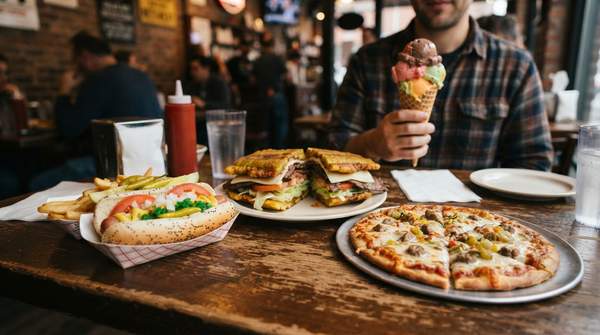
The standard Chicago dog begins with an all-beef frank nestled inside a poppy seed bun. From there, seven toppings stack up: yellow mustard, chopped white onions, neon green sweet pickle relish, tomato wedges, a dill pickle spear, pickled sport peppers, and a dash or two of celery salt. Because of all those vegetables, the complete assembly is said to be "dragged through the garden."
Cooking method varies by vendor. Most hot dogs are steamed or water-simmered; less often, they're grilled over charcoal, in which case they're called "char-dogs."
Those seven toppings weren't arbitrary. During the Great Depression, vendors added fresh vegetables to create a filling, affordable meal for a nickel. Fluky's "Depression Sandwich" famously epitomized the approach, resulting in the all-beef dog on a poppy seed bun with its now-standard seven toppings. As the Chicago Tribune's Eva Remijan-Toba puts it, the dog became a rite of passage for tourists and a source of hometown pride for locals — shaped by the neighborhoods and traditions that built the city.
Chicago Pizza: Deep-Dish vs. Tavern-Style
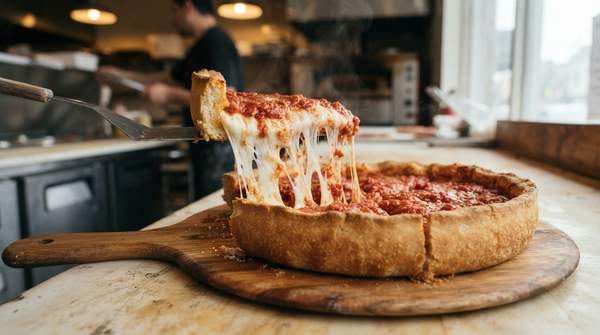
Here's the distinction visitors most often miss. Deep-dish — the thick-crusted pie baked in a pan — is the style most associated with Chicago, and if you're a local, chances are you'll be taking your out-of-town guests to one of the city's many deep-dish establishments, WTTW's Chicago Stories explains.
But many opinionated Chicagoans say the preferred pizza of true locals is tavern-style: a thin-crust pie cut into squares rather than wedges. So the real trade-off isn't deep-dish or nothing. If you want the dish Chicago is famous for, order deep-dish. If you want what Chicagoans themselves reach for, order tavern-style. Preferably both.
The Original Rainbow Cone: A Century of Sweetness
For dessert, Chicago offers a century-old answer. The Original Rainbow Cone has been open in the city since 1926, celebrating 100 years in business — and it still serves a signature cone stacked in slices, not scoops. The OG features five flavors layered together: chocolate, strawberry, Palmer house (a vanilla base with candied fruit and nuts), pistachio almond, and orange sherbet.
The sliced format matters. Rather than choosing one flavor, you work through all five in a single cone, with the sherbet and fruit flavors cutting against the richer chocolate and pistachio. It's the kind of treat best eaten outdoors on a hot summer day — which is exactly how generations of Chicagoans have enjoyed it.
Comparing Chicago's Iconic Dishes
To decide which classic fits your visit or your next meal, line them up side by side. Each occupies a different slot: the jibarito for a hearty lunch, the hot dog for a quick, vegetable-loaded bite, tavern-style or deep-dish depending on your pizza loyalties, and the Rainbow Cone for something sweet.
| Dish | Defining Characteristics | Typical Toppings/Fillings | Origin Story Snippet |
|---|---|---|---|
| Jibarito | Sandwich built on fried, flattened green plantains instead of bread | Steak most common; also ham and cheese, octopus, shrimp, blood sausage, or vegetarian | Originated in Humboldt Park, heart of Chicago's Puerto Rican community |
| Chicago-Style Hot Dog | All-beef frank on a steamed poppy seed bun; steamed, water-simmered, or less often charcoal-grilled ("char-dog") | Yellow mustard, chopped white onions, neon green relish, tomato wedges, dill pickle spear, sport peppers, celery salt | Great Depression vendors added vegetables for an affordable, filling meal; Fluky's "Depression Sandwich" set the seven-topping standard |
| Tavern-Style Pizza | Thin crust, cut into squares | Toppings vary; the cut and thin crust define the style | A local Chicago style — many residents name it the true Chicago pizza over deep-dish |
| The Original Rainbow Cone | Ice cream cone with flavors served in slices rather than scoops | Chocolate, strawberry, Palmer house, pistachio almond, orange sherbet | Open in Chicago since 1926; celebrating 100 years in business |
One thing the table clarifies: none of these dishes overlaps. The jibarito is a plantain sandwich, the hot dog is defined by its seven-topping construction, tavern-style by its thin crust and square cut, and the Rainbow Cone by its five stacked slices. If you're choosing by appetite — a full meal versus a handheld snack versus dessert — the right pick follows directly.
Choosing Your Chicago Culinary Adventure
The decision, then, is simple: pick which iconic dish or pizza style fits what you want from a Chicago meal, based on its characteristics above. The measurable indicator of success? You've settled on a specific dish — jibarito, Chicago dog, tavern-style, deep-dish, or a Rainbow Cone — to try on your visit or at your next meal, rather than leaving the choice to chance. Wherever you land, you'll be eating something this city has spent generations defining.
Sources
- A Jam-Packed 24-Hour Chicago Iconic Dish Crawl — Eater Chicago
- The story behind Chicago’s most iconic hot dog — Chicago Tribune
- Iconic Foods — WTTW Chicago