VA Launches Initiatives to Centralize Veteran Support

In Tennessee, veterans can now access a statewide portal for all their support needs, from housing to healthcare.

MA
Marco Alvarez

May 15, 2026 · 4 min read

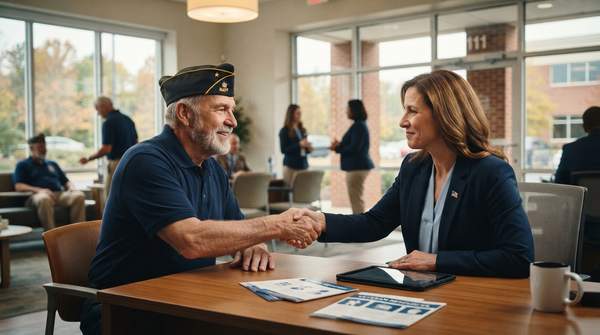
Veterans in Tennessee accessing a centralized digital portal for support services, including housing and healthcare, symbolizing unified and accessible aid.

In Tennessee, veterans can now access a statewide portal for all their support needs, from housing to healthcare. The statewide portal for veteran support needs marks a significant step towards centralized, comprehensive care. The initiative provides a single digital hub, simplifying how service members and their families navigate available resources, according to Clarksville Now. This expansion forms part of a broader push for veteran support services centralization, slated for 2026. The Safeguard Veterans pilot launched in January 2026.

The VA advocates for centralized, consistent care, but the actual delivery and integration of these services will vary significantly across diverse communities and individual veteran needs. The varying delivery and integration of services across diverse communities underscores the ongoing challenge of providing uniform support across a varied veteran population.

Based on initial rollouts and stated goals, the VA prioritizes a modernized, integrated approach to veteran care. The VA's modernized, integrated approach to veteran care appears likely to improve access for many, though challenges in equitable implementation and awareness will persist.

How Veterans Will Directly Benefit

  • The Veterans Connect Portal offers a single platform to search for services, connect with verified providers, and access support for employment, healthcare, housing, and education, according to NBC39.
  • Reimbursement for in-home care will increase to up to 100% of the cost of similar services in a VA Community Living Center, according to caresmartz360.

Veterans will gain more comprehensive, easily navigable support for diverse needs, coupled with increased financial accessibility for in-home care. The significant expansion of in-home care reimbursement, while beneficial, risks exacerbating disparities if local communities lack the robust infrastructure and trained personnel to deliver these services consistently across all regions. The portal and increased reimbursement together aim to streamline access and reduce financial burdens, but their effectiveness hinges on local capacity.

The Strategic Push for Modernization

The VHA reorganization modernizes the system, ensuring veterans receive consistent, high-quality care regardless of the VA facility they visit, according to DAV. The VHA reorganization strategy targets improved veteran health outcomes and seeks consistent policy application across all facilities.

The VA actively addresses historical inconsistencies in care quality and access through this system-wide modernization. Yet, despite the VA's stated goal of universal consistency, the targeted, multi-year pilot approach of initiatives like Safeguard Veterans reveals true uniformity in veteran care remains a distant aspiration. Achieving consistent, high-quality care across the VA system demands more than top-down policy; it requires active, on-the-ground capacity building, training, and technical assistance for community partners in diverse areas. The multi-year pilot approach and the need for active, on-the-ground capacity building suggest significant existing inconsistencies must first be overcome.

Operational Shifts for Providers and Partners

The Veterans Connect platform equips Veteran Service Organizations, local governments, and agency partners with tools to better connect individuals to services, according to Clarksville Now. Concurrently, the Safeguard Veterans pilot aims to equip providers and community members with tools, training, and technology to improve communication and collaboration among organizations serving Veterans, according to VA News (.gov).

These initiatives empower the network of organizations supporting veterans with enhanced tools and collaborative frameworks. By equipping local Veteran Service Organizations and community partners, the VA implicitly acknowledges its own limitations in directly reaching and serving every diverse veteran population effectively. The VA's implicit acknowledgment of its own limitations suggests it cannot be the sole direct provider for all veteran needs, especially in varied community settings, and relies on a robust local ecosystem.

Upcoming Expansions and Pilot Progress

Key VA home care programs expanding in 2026 include Home-Based Primary Care (HBPC), Veteran Directed Care (VDC), and Homemaker and Home Health Aide Services (H/HHA), according to caresmartz360. The Safeguard Veterans pilot launched in January 2026 in six diverse communities: Fayetteville, N.C.; Hampton, Va.; San Antonio, Texas; Saginaw, Mich.; Cheyenne, Wyo.; and Las Vegas, Nev. according to VA News (.gov).

The expansion of in-home care and the localized testing of suicide prevention strategies mark the next phase in the VA's commitment to comprehensive, community-integrated support. While the VA aims for consistent, centralized policy, expanded in-home care will likely create a two-tier system of access. The two-tier system of access will heavily depend on the varying resources and adaptive capacities of diverse local communities. The Safeguard Veterans pilot, critical for strengthening suicide prevention and community support, launched in January 2026. This indicates foundational support for veterans will not be immediately available.

Understanding the New Framework

What are the benefits of centralizing veteran support services?

The VHA Central Office will set policy goals and conduct financial management, oversight, and compliance, according to DAV. The VHA Central Office's centralized oversight standardizes service quality and financial accountability across the system, ensuring consistent policy application and reducing regional variations. It aims to create a more predictable and equitable service landscape.

How is veteran support expanding in 2026?

Strategies being tested include training in care navigation and task-sharing, education in suicide prevention, PTSD-focused care and research, technical assistance for community partners, and technology-enabled tools, according to VA News (.gov). These methods enhance local capabilities and integrate community resources more effectively into the broader VA framework. The focus on diverse strategies, such as training in care navigation and task-sharing, education in suicide prevention, PTSD-focused care and research, technical assistance for community partners, and technology-enabled tools, suggests a recognition that a one-size-fits-all approach is insufficient for complex veteran needs.

If implemented effectively across diverse communities, the VA's modernized, integrated approach to veteran care, spearheaded by initiatives like the Veterans Connect Portal and the Safeguard Veterans pilot, appears likely to significantly improve access and quality of support for many veterans by 2026.