By 2010, more than half of all large U.S. cities had at least one gentrifying neighborhood, a statistic that highlights a profound and often contentious shift in the urban landscape. Understanding what gentrification is, its causes, effects, and potential solutions in urban areas is crucial for residents, policymakers, and anyone invested in the future of our cities. This process of neighborhood change, marked by economic and demographic transformations, is reshaping communities, bringing both new investment and significant challenges for long-term residents. It's a topic that touches on housing affordability, cultural identity, and the very structure of urban life, making it a critical conversation for our city today.
Gentrification is a complex phenomenon that often sparks debate. To some, it represents revitalization—the welcome arrival of new businesses, improved infrastructure, and rising property values. For others, it signals displacement, the erosion of community bonds, and the loss of cultural heritage. The reality is often a mixture of both. This guide will provide an analytical overview of gentrification, grounded in research and expert analysis, to explain how this process works, the historical factors that set the stage for it, its multifaceted impacts on communities, and the policy tools available to manage its consequences.
Understanding the Core Concept of Gentrification
Gentrification is a process of neighborhood change that occurs in historically disinvested urban areas, involving both economic and demographic shifts. According to a definition cited in a study published by the National Institutes of Health (NIH), it is "the process by which central urban neighborhoods that have undergone disinvestments and economic decline experience a reversal, reinvestment, and the in-migration of a well-off middle- and upper-middle-class population." While definitions can vary slightly, most urban scholars generally agree on the core components of this process. The data suggests this is not a new or isolated trend; one analysis notes that gentrification has become more prevalent over the past two decades.
To better understand the mechanics, it helps to break down the process into its key elements. Gentrification typically involves a sequence of interconnected changes:
- Historical Disinvestment: The process almost always begins in neighborhoods that have experienced a long period of capital flight and neglect. These areas often have a housing stock that has fallen into disrepair and property values that are significantly lower than the city's average. This economic decline is frequently rooted in historical policies that discouraged investment.
- Reinvestment and Capital Influx: The cycle shifts when new investment begins to flow into the neighborhood. This can be driven by private developers seeing potential for profit, city-led revitalization projects, or individuals ("pioneers") attracted by low property prices and the area's cultural character or convenient location. This new capital funds the renovation of existing buildings and the construction of new housing and commercial spaces.
- Demographic and Economic Shifts: As reinvestment occurs, the neighborhood's population begins to change. Higher-income households and more educated residents move in, attracted by the upgraded housing, new amenities like cafes and boutiques, and proximity to urban centers. This influx of more affluent residents drives up demand for housing.
- Rising Property Values and Rents: The increased demand directly leads to higher property values and rents. Homeowners may see the value of their primary asset increase, but renters face escalating monthly costs. For small business owners, commercial rents can also rise precipitously, making it difficult to remain in the community they have long served.
- Displacement of Long-Term Residents: This is the most controversial and socially significant consequence of gentrification. As housing becomes more expensive, lower-income residents, who are often disproportionately people of color, are unable to afford the rising rents or property taxes. They are forced to move, a process known as direct displacement. Indirect displacement also occurs when a neighborhood becomes unwelcoming or unaffordable for new residents from similar low-income backgrounds.
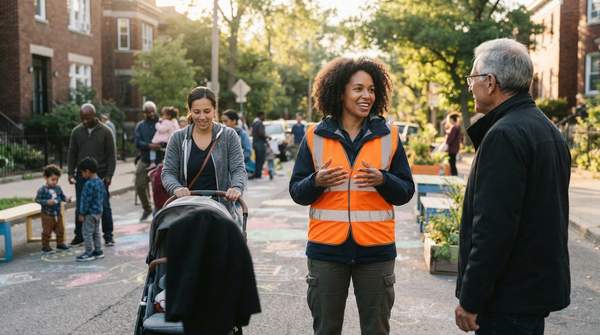
The changes brought by gentrification can be visualized by comparing a neighborhood's characteristics before and after the process takes hold. While every community is unique, certain patterns are common.
| Characteristic | Pre-Gentrification State | Post-Gentrification State |
|---|---|---|
| Median Income | Significantly below city average | Approaches or exceeds city average |
| Property Values | Low, often stagnant or declining | Rapidly appreciating |
| Housing Stock | Older, often in need of repair; high rental share | Renovated historic homes and new construction |
| Local Businesses | Locally-owned, serving existing community needs | Boutiques, upscale cafes, national chains |
| Resident Demographics | Predominantly lower-income, often communities of color | Higher share of affluent, more educated, often white residents |
Key Causes and Drivers of Urban Gentrification
Gentrification does not happen in a vacuum. It is a modern process deeply rooted in a history of urban policy, economic forces, and social patterns. The susceptibility of certain neighborhoods to gentrification is often a direct result of decades of systemic disinvestment. Research from the Urban Displacement Project at UC Berkeley points to several key historical conditions that created the foundation for today's neighborhood changes.
One of the most significant historical drivers was redlining. This discriminatory practice, which began in the 1930s and was institutionalized by the federal government's Home Owners' Loan Corporation, involved color-coding maps of metropolitan areas to designate investment risk. Neighborhoods with predominantly Black, immigrant, or minority populations were colored red and labeled "hazardous," effectively cutting them off from mortgage lending and other forms of credit. According to the Urban Displacement Project, banks and the federal government deemed these neighborhoods "unfit for investment," starving them of the capital needed for maintenance and growth for generations. This created a legacy of depressed property values and deteriorating infrastructure, making them prime targets for future reinvestment at a much higher profit margin.
Following World War II, the phenomenon of white flight further concentrated poverty in central cities. Federally subsidized highways and mortgages encouraged middle-class white families to move to newly developed suburbs. This mass exodus drained cities of their tax base, leading to underfunded schools, declining public services, and further economic decline in the urban core. The neighborhoods left behind, often the same ones that had been redlined, became increasingly isolated and disinvested.
Later, urban renewal programs in the mid-20th century, while often intended to "revitalize" cities, frequently resulted in the destruction of established, low-income neighborhoods to make way for highways, public housing projects, and commercial developments. These top-down initiatives displaced thousands of residents and fractured community ties, further destabilizing areas that would later become susceptible to market-driven gentrification.
More recent events have also played a role. The 2008 foreclosure crisis disproportionately affected communities of color. The Urban Displacement Project notes that between 2007 and 2009, there were 790 foreclosures for African-Americans and 769 for Latinos per 10,000 loans, compared to 452 for non-Hispanic Whites. This crisis allowed corporate investors to purchase large numbers of distressed properties at low prices, converting them into rental units and positioning themselves to capitalize on the subsequent economic recovery and rising housing demand.
Socioeconomic Effects of Gentrification on Local Communities
Displacement of long-term, lower-income residents is the most widely documented negative effect of gentrification. While new investment can bring improvements like safer streets, better schools, and new amenities, these benefits are not always shared equally, impacting residents' financial stability, and physical and mental health.
This displacement is primarily driven by economic pressures. As a neighborhood gentrifies, landlords may raise rents to match what new, higher-income tenants are willing to pay. For example, in San Francisco's Mission District, the median rent for a typical two-bedroom apartment reportedly increased by nearly 70% between 2011 and 2017. For homeowners on fixed incomes, rising property values lead to higher property tax bills, which can become unaffordable. This is a crucial area where understanding how property taxes are calculated becomes essential for long-term residents seeking to stay in their homes. These financial pressures can force families who have lived in a community for generations to leave.
Beyond the direct economic cost, displacement has profound health consequences. A systematic review published in Frontiers in Public Health confirms that gentrification has a measurable impact on the health of urban residents. The stress of housing instability and forced moves can be immense. According to the Urban Displacement Project, mothers are 20 percent more likely to report depression in the year following an eviction compared to their peers. The organization also cites research linking frequent moves with "higher levels of behavioral and emotional problems; increased teenage pregnancy rates; accelerated initiation of illicit drug use; adolescent depression; and reduced continuity of healthcare."
Furthermore, the loss of social networks and community support systems can exacerbate these health issues. When residents are dispersed, they lose connections to neighbors, local institutions, and cultural spaces that provide a sense of belonging and mutual support. The Urban Displacement Project also notes a political consequence: "Residents who are dispersed from other members of their community may have less political power as voting blocs are diluted and communities become less organized." This makes it harder for displaced populations to advocate for their needs in their new locations or fight for protections in their old ones.
Policy Approaches to Manage and Mitigate Gentrification
To manage gentrification and foster equitable development, cities are exploring policy interventions that minimize displacement and ensure benefits are shared by existing residents. The Urban Displacement Project outlines a comprehensive "3 P's" framework for anti-displacement strategies: Protect, Produce, and Preserve.
- Protect Residents from Displacement: This set of policies focuses on providing stability for current tenants and homeowners.
- Tenant Protections: Measures like "just cause" eviction ordinances limit the reasons a landlord can evict a tenant, preventing arbitrary displacement. Rent stabilization or rent control policies can cap annual rent increases, keeping housing affordable for long-term residents.
- Legal Aid and Support: Funding for legal services can help tenants fight unlawful evictions and negotiate with landlords. Emergency rental assistance programs can provide a crucial safety net for households facing a temporary financial crisis.
- Homeowner Assistance: Property tax relief programs for low-income or senior homeowners can prevent them from being taxed out of their homes. Foreclosure prevention counseling can also provide vital support.
- Produce More Affordable Housing: Increasing the overall supply of housing, particularly units dedicated to low- and middle-income households, is critical to easing market pressure.
- Inclusionary Zoning: These policies require or incentivize private developers to set aside a certain percentage of units in new residential projects as affordable housing.
- Housing Trust Funds: These are dedicated public funds, often capitalized by real estate transfer taxes or development fees, that are used to build and subsidize affordable housing projects.
- Zoning Reforms: Allowing for greater housing density, such as permitting accessory dwelling units (ADUs) or multi-family homes in areas zoned for single-family houses, can expand the housing supply.
- Preserve Existing Affordable Housing: It is often more cost-effective to preserve existing affordable housing than to build new units.
- Acquisition and Rehabilitation: Non-profits or public agencies can purchase naturally occurring affordable housing (older buildings with lower rents) and add deed restrictions to ensure they remain affordable long-term.
- Community Land Trusts (CLTs): In a CLT model, a non-profit corporation acquires land and holds it in trust for the community. It can then sell or rent the homes on that land to lower-income residents at affordable prices, as the cost of the land is removed from the equation.
- Small Business Support: Providing grants, loans, and technical assistance to legacy businesses can help them weather rising commercial rents and continue to serve the community.
Effectively mitigating displacement and creating inclusive, mixed-income communities requires a comprehensive approach, combining multiple strategies from all three categories, as no single policy is a silver bullet.
Why Gentrification Matters
Gentrification fundamentally alters our city's social and economic fabric, a process with real-world consequences for individuals, families, and neighborhood identity. Widespread displacement erases cultural heritage, homogenizing urban spaces by replacing long-standing, often minority-owned, local businesses with generic chains and boutiques, thus changing the character of diverse communities.
Gentrification raises critical questions about equity and access to opportunity, particularly in neighborhoods systematically denied resources for decades. When investment arrives, original residents who weathered difficult years are often pushed out, unable to benefit from new amenities, improved schools, and safer streets. This perpetuates a cycle of geographic inequality, where access to well-resourced neighborhoods remains a privilege reserved for the affluent, making understanding gentrification essential for building a just and inclusive city.
Frequently Asked Questions
What is the main cause of gentrification?
There isn't one single cause, but rather a combination of factors. The process is rooted in a history of disinvestment in certain urban neighborhoods, often due to discriminatory policies like redlining. This creates areas with depressed property values. The "cause" of change is then new capital investment, driven by shifting housing preferences, public and private revitalization efforts, and developers seeking profit in these undervalued areas.
What are the first signs of gentrification?
Early indicators often include a noticeable increase in property renovations and real estate speculation, where investors buy properties with the intent to "flip" them. You may see the arrival of new businesses that cater to a more affluent clientele, such as artisanal coffee shops, yoga studios, or high-end restaurants. Other signs include rising rents and home prices that outpace the city's average and a subtle but steady shift in the neighborhood's demographics.
Is gentrification always bad?
The term carries a negative connotation because of its strong association with displacement. However, the effects are nuanced. The investment that accompanies gentrification can lead to positive changes, such as improved public infrastructure, lower crime rates, and better-funded schools. A study from the NIH suggests the health impacts can have both "detrimental and beneficial effects." The central challenge is that these benefits often accrue to the new, wealthier residents, while the costs—namely displacement and cultural erasure—are borne by the long-term, lower-income community.
How is gentrification different from urban renewal?
While both involve the transformation of urban neighborhoods, they operate differently. Urban renewal, prominent from the 1940s to the 1970s, was typically a top-down, government-led process that used eminent domain to clear entire areas designated as "blight" or "slums" for large-scale redevelopment projects like highways or housing projects. Gentrification is generally a more gradual, market-driven process led by private investment, though it can be encouraged by public policies. It transforms a neighborhood building by building, rather than through wholesale demolition.
The Bottom Line
Driven by historical disinvestment followed by new capital, gentrification is a powerful force of neighborhood change. While it can bring revitalization, its most significant consequence is the displacement of lower-income residents, fragmenting communities and deepening urban inequality. Addressing this requires multi-pronged policy solutions to protect residents, produce new affordable housing, and preserve existing affordable stock for an equitable urban future.