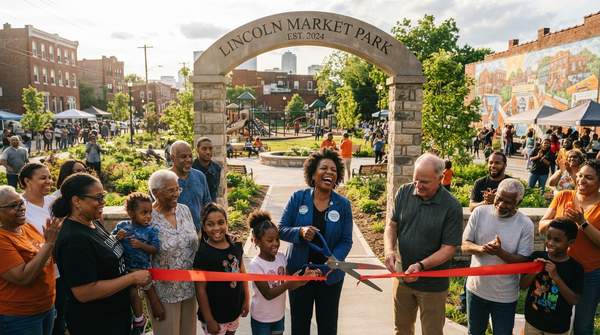
Homes in highly walkable neighborhoods commanded a significant premium, selling for 23.5% more than comparable homes in car-dependent areas, according to warrington. This amounted to approximately $77,668 in increased property value. For many homeowners, this translates directly into greater equity and a stronger financial position.
The substantial premium shows walkability as a quantifiable driver of property value. It shows that access to local businesses and services by foot offers tangible financial benefits beyond mere convenience.
What is a Walk Score?
Walk Score, a widely used metric, rates neighborhood walkability on a scale from 0 to 100, according to warrington. A higher score indicates better pedestrian access to amenities. For instance, a score of 90 or above signifies a "Walker's Paradise," where daily errands do not require a car.
The average Walk Score across 130 cities stands at 48, also reported by warrington. This figure suggests that most urban areas have considerable room for improvement in pedestrian infrastructure. Understanding this baseline helps interpret how walkability influences property values and quality of life.
The General Impact on Property Sales
Homes located in walkable neighborhoods generally sell faster and command higher prices than properties in car-dependent areas, according to legacyrealestateteam. This trend highlights a clear market preference among buyers for pedestrian-friendly environments.
Walkability provides a significant market advantage, as evidenced by faster sales and higher prices. Properties become more attractive to potential buyers, leading to quicker transactions and stronger financial returns for sellers.
Where Walkability's Influence Varies
The financial impact of walkability is not uniform across all housing markets. Housing prices showed a positive correlation with walkability scores in areas with lower housing prices, according to mdpi. This suggests walkability effectively boosts property values where homes are more affordable.
However, the same study found no significant association between housing prices and walkability scores in areas already characterized by high housing prices, mdpi reported. In premium markets, other factors likely dominate property valuation, as the study found no significant association between housing prices and walkability scores. Urban developers investing in high-priced markets may find walkability initiatives do not translate into additional property value gains.
The Validity and Broader Importance of Walkability
Beyond its market influence, Walk Score is recognized as a valid measure for estimating neighborhood walkability, especially at the 1600-meter scale, according to validation of walk score® for estimating neighborhood .... The scientific validation of Walk Score confirms its reliability as an indicator.
The metric's credibility reinforces its utility for both real estate analysis and urban planning. It allows for consistent assessment of pedestrian infrastructure, contributing to informed decisions about community development and quality of life improvements.
What Do Highly Walkable Cities Look Like?
What is considered a highly walkable score?
Highly walkable scores typically range above 70, indicating most errands can be accomplished on foot. For example, San Francisco boasts a Walk Score of 89, while New York City has 88, and Boston registers 86, according to warrington. Urban environments designed for pedestrian convenience are highlighted by these scores.
What are the benefits of living in a walkable neighborhood?
Living in a walkable neighborhood offers benefits beyond property value. Residents often experience improved access to local businesses, parks, and public transportation. This can foster stronger community ties and reduce reliance on personal vehicles, contributing to a more sustainable lifestyle.
The Future of Walkability in Real Estate
Ultimately, homes with higher Walk Scores continue to command higher prices and experience quicker sales, according to legacyrealestateteam. The trend of higher prices and quicker sales for homes with higher Walk Scores is particularly pronounced in moderately priced markets, where walkability provides a significant financial boost for homeowners.
However, the data from mdpi shows this premium diminishes in already high-priced urban centers. While walkability remains critical for market appeal, its financial leverage has a ceiling, a point suggested by the data from mdpi showing the premium diminishes in high-priced urban centers.
Real estate agents and developers in mid-tier cities should leverage walkability as a primary selling point for substantial financial gain, as the 23.5% price premium remains a clear opportunity. Continued investment in pedestrian infrastructure by city planners could further solidify this market advantage, especially in developing neighborhoods.