Neighborhoods

What Are Neighborhood Associations and Their Role in Local Governance?

Neighborhood associations are volunteer-led groups that form the bedrock of community engagement, acting as a vital conduit between residents and city hall. They provide a formal platform for residents to discuss shared concerns and amplify their collective voice in local governance.

DM
Derek Molina

April 5, 2026 · 10 min read

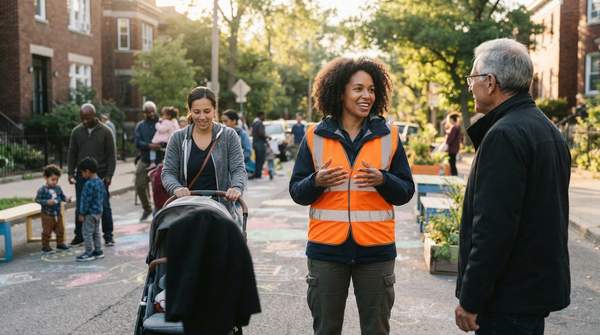
Diverse residents and a city official engaging in a lively discussion at a community meeting in a sunny park, symbolizing neighborhood associations' role in local governance.

Have you ever wondered who speaks for your block when a new development is proposed, or how decisions about traffic calming on your street are made? The role of neighborhood associations and their impact on local governance is a critical, yet often overlooked, aspect of civic life. These volunteer-led groups form the bedrock of community engagement, acting as a vital conduit between residents and the corridors of city hall. In our neck of the woods, understanding how these organizations function is the first step toward having a real say in the future of your community.

Neighborhood associations are more than just social clubs or potluck organizers; they are foundational structures for grassroots democracy. They provide a formal platform for residents to come together, discuss shared concerns, and amplify their collective voice. As cities grow and change, the need for organized, local-level input becomes increasingly important. Whether the issue is public safety, zoning changes, or the quality of local parks, these associations provide the framework for residents to move from passive observers to active participants in shaping their environment. Let's take a closer look at what they are, how they work, and why they matter so much to the health of our city.
What Is a Neighborhood Association and Its Purpose?

A neighborhood association is a group of residents who meet regularly to accomplish specific goals in their neighborhood. This definition, provided in a toolkit by the City of Providence, captures the essence of these organizations. Think of a neighborhood association as a dedicated forum for your specific geographic area. It’s a voluntary body, typically open to all residents—including both renters and homeowners—within a set of defined boundaries. Unlike a mandatory homeowners association (HOA), which has legal authority to enforce private covenants, a neighborhood association’s power comes from its ability to organize, advocate, and represent the collective will of its members to the public bodies that do hold legal power, such as the city council or planning commissions.

The core purpose of these associations is to improve the quality of life for everyone in the community. They serve as a central hub for communication and action, transforming individual concerns into collective priorities. According to city-published guides, their functions are multifaceted and essential for a thriving community. Here’s what you need to know about their primary objectives:

  • Platform for Discussion: They create a space for open dialogue on a wide range of topics, including local development projects, environmental concerns, public safety issues, and the effectiveness of government services.
  • Problem Identification and Resolution: Associations are on the front lines of identifying local challenges, from potholes and broken streetlights to more complex issues like crime patterns or the need for new public amenities. They then work to find solutions, often in partnership with city agencies.
  • Community Building: A key function is to foster a sense of community and social cohesion. By organizing events like block parties, neighborhood clean-ups, and holiday celebrations, they help neighbors get to know each other, which in turn builds a stronger, safer, and more connected community. This is a great way to get started on projects like the ones detailed in our guide to community events.
  • Advocacy and Representation: Perhaps their most critical role is serving as the official voice of the neighborhood. They represent their community's interests before elected officials, city departments, and other decision-making bodies. An organized group presenting a unified message carries far more weight than a handful of individual complaints.
  • Resource Connection: Effective associations act as information clearinghouses, connecting residents with available city resources, grants, and programs that can help address local needs.
  • Volunteer Mobilization: They provide a ready pool of volunteers for community projects, whether it's planting trees in a local park, staffing a neighborhood watch program, or helping elderly neighbors with yard work.

Ultimately, a neighborhood association empowers residents by giving them a structured way to participate in the civic process. It formalizes the natural desire of people to have a say in the character and future of the place they call home.

Structure and Functions of Neighborhood Associations Explained

While every neighborhood association has its own unique character, most follow a similar framework for their structure and operations. This framework is designed to be democratic, transparent, and effective in translating resident concerns into tangible action. Understanding this structure is key to seeing how these groups function as a form of hyper-local government, albeit one without legal enforcement powers.

The formation of an association is the first step. According to guides like one from Athens-Clarke County, the process usually begins with a small group of motivated residents. They start by talking to their neighbors to gauge interest, defining the geographical boundaries of their neighborhood, and scheduling an initial organizing meeting. At this first meeting, attendees typically discuss shared goals, elect interim officers, and begin the process of drafting bylaws. These bylaws are the constitution of the association, outlining its purpose, membership criteria, officer duties, meeting procedures, and voting rules.

The typical governance structure includes a set of elected officers who manage the day-to-day operations. These roles commonly include:

  • President or Chairperson: The public face of the association who presides over meetings, sets the agenda, and acts as the primary liaison with city officials and other external organizations.
  • Vice President or Vice-Chairperson: Supports the president and steps in when they are unavailable. This role often involves overseeing specific committees or projects.
  • Secretary: Responsible for record-keeping. This includes taking minutes at meetings, maintaining membership lists, and handling official correspondence. Accurate minutes are crucial for tracking decisions and maintaining institutional memory.
  • Treasurer: Manages the association's finances. This involves collecting any dues, maintaining a bank account, preparing budgets, and reporting on the financial status of the organization at meetings. Financial transparency is essential for building and maintaining trust among members.

Beyond the core officers, many associations use a committee structure to divide the workload and leverage the specific skills and interests of their members. Common committees might focus on public safety, zoning and land use, beautification, social events, or communications. For instance, a zoning committee would be responsible for tracking proposed developments in the area, educating neighbors about their potential impact, and formulating the association's official position to present at public hearings.

Association functions extend beyond visible monthly or quarterly meetings, where residents share information, debate issues, and make decisions following a clear agenda. Between meetings, officers and committee members communicate with city staff, write letters, research issues, and organize community projects. Operational documents, from welcome letters to official policy statements, are crucial, as highlighted by the Foundation for Community Association Research's governance handbook.

How Do Neighborhood Associations Impact Local Government?

Neighborhood associations serve as a direct, effective channel for residents to influence public policy and a resource for city officials to gauge public opinion and disseminate information. The City of Providence’s toolkit calls them "one of the best ways to engage with the City and make community voices heard," a view shared by municipal governments nationwide.

Associations formalize and consolidate public input, giving city planners more reason to consider a well-researched position paper from hundreds of households over disconnected emails. By surveying residents, hosting discussions, and reaching consensus, associations present a unified front. This organized advocacy is a documented phenomenon; a ScienceDirect study, for example, examined policy advocacy among Los Angeles neighborhood councils, demonstrating their active role.

Second, they act as watchdogs. Association members often attend city council, zoning board, and planning commission meetings, keeping a close eye on decisions that could affect their neighborhood. They track proposed ordinances, development applications, and capital improvement projects, and they alert their neighbors to important deadlines for public comment. This vigilance ensures that the neighborhood's interests are not overlooked in the complex machinery of city governance.

Third, some analysis suggests that these groups can function as a form of decentralized government. A paper from the Lincoln Institute of Land Policy proposes that community associations "may serve as a private mechanism for decentralizing local government." This interpretation suggests that by taking on responsibilities like organizing park clean-ups, managing community gardens, or running neighborhood watch programs, associations relieve some of the burden on municipal services. They handle hyper-local issues that a centralized city government might lack the resources or granular knowledge to address effectively, allowing municipal agencies to focus on larger-scale services and infrastructure.

Associations build social capital by bringing neighbors together, fostering relationships, and creating a more resilient, engaged citizenry. Personal connections from meetings or community events lead to a greater willingness to solve problems, benefiting the neighborhood and the city.

Why Neighborhood Associations Matter for Community Development

Neighborhood associations impact the tangible, day-to-day experience of living in a community, extending beyond the political sphere. Their work contributes to a stronger social fabric, a safer environment, and even the financial value of the homes within their boundaries. These volunteer efforts translate into real-world, measurable benefits for residents.

A research paper found that neighborhood associations concretely impact property values. An active association often creates a better-maintained, safer, and more aesthetically pleasing environment, making the neighborhood more desirable. This increased demand supports stronger property values, directly affecting homeowner financial well-being and influencing calculations in our guide to local property taxes.

Beyond financial considerations, associations are champions of quality of life. They are often the driving force behind community improvements, which can take many forms:

  • Public Safety: Many associations work closely with local police departments to establish Neighborhood Watch or Crimewatch programs, which are cited in the Providence toolkit as a key activity. They might advocate for better street lighting, new crosswalks to improve pedestrian safety, or traffic calming measures like speed bumps to slow down cars on residential streets.
  • Beautification and Green Space: From organizing annual clean-up days to planting flowers in public medians and advocating for the creation of new parks or community gardens, associations play a huge role in making a neighborhood a more beautiful and pleasant place to live.
  • Community Identity and Pride: By hosting events, creating a neighborhood newsletter, or even just putting up signs at the neighborhood’s boundaries, associations help forge a distinct identity. This sense of place fosters pride among residents and a stronger feeling of belonging.

At its core, the importance of a neighborhood association lies in its ability to empower residents. It provides a structure for people to have agency over their immediate environment. It transforms a simple collection of houses on a map into a cohesive community with a shared voice and the capacity for collective action. In a world that can often feel large and impersonal, a neighborhood association brings governance down to a human scale, proving that a small group of dedicated citizens can indeed make a significant and positive impact.

Frequently Asked Questions

What's the difference between a neighborhood association and an HOA?

This is a common point of confusion. The primary difference lies in their structure and authority. A neighborhood association (NA) is a voluntary organization open to all residents (renters and owners) in a specific geographic area. Its power is based on advocacy and influence. An HOA (Homeowners Association), on the other hand, is typically a mandatory legal entity created by a developer. Property owners in an HOA are required to be members and pay dues. HOAs have the legal authority to enforce a set of rules and restrictions, known as covenants, conditions, and restrictions (CC&Rs), that govern things like property maintenance and land use.

How do I join or start a neighborhood association?

To join an existing association, a good first step is to check your city's official website, which often maintains a directory of registered neighborhood groups. You can also look for community bulletin boards, local social media groups, or simply ask your neighbors. To start one, the process generally involves gathering a few interested neighbors, defining your neighborhood's boundaries, holding an initial public meeting to elect officers and establish goals, and drafting bylaws. Many cities provide resources, such as the toolkits and workbooks available from municipalities like Providence, RI, and Springfield, OH, to guide you through the process.

Do neighborhood associations have any real power?

Neighborhood associations do not have legal or enforcement power in the way a city government or an HOA does. They cannot issue fines or force a resident to comply with a rule. However, their power is very real—it is the power of influence and collective voice. A well-organized association that represents a large number of residents can exert significant pressure on elected officials and city staff. Their formal recommendations on zoning cases, traffic plans, and budget priorities are often given serious consideration by decision-makers, making them a powerful force in local politics.

Are there any downsides to neighborhood associations?

While overwhelmingly positive, neighborhood associations can face challenges. For objectivity, it's important to acknowledge them. They can sometimes be dominated by a small, unrepresentative group of residents, or they may struggle with volunteer burnout and inactivity. There is also the risk of "NIMBY-ism" (Not In My Back Yard), where an association might oppose necessary developments, like affordable housing or public transit, out of a narrow view of their own interests. A healthy association requires broad participation and a commitment to considering the good of the entire city, not just one's own block.

The Bottom Line

Neighborhood associations serve as the essential voice for residents in local governance, building community, solving local problems, and providing a structured platform for citizens to shape their home. Getting involved with your local association is one of the most effective ways to make a tangible, positive impact on your community's future.