As Covington embarks on a new master plan for historic Goebel Park, the city faces a critical investment: accessible public green spaces. This is not a discretionary expense but an essential one for long-term economic vitality, social equity, and community well-being, building a resilient, healthy, and prosperous urban environment for generations.
With increasing population density and a warming climate, urban green space is no longer a luxury but an active component of public health infrastructure, an economic driver, and a social cohesion builder. Decisions made now, such as in Goebel Park planning and regional budget allocations, will define our city's future livability and equity. Evidence from other municipalities shows placing green space at the center of urban planning is essential.
The Economic and Environmental Value of Investing in Public Parks
Far from being a drain on municipal resources, well-planned public green spaces are powerful economic engines and vital environmental assets. Data shows they attract residents, bolster property values, and can be developed through innovative financial models that avoid undue taxpayer burden. This reflects a broader urban development shift, recognizing quality of life as key to economic competitiveness.
A prime example of this synergy is unfolding in Richardson, Texas. There, a new 281-unit multifamily community is being developed in partnership with the city. Rather than viewing the project solely through the lens of housing units, the plan incorporates a new public green space and 75 public parking spaces, supported by Tax Increment Financing (TIF). This financial tool allows the city to use the future increase in property tax revenue from the new development to fund the public improvements today. Kevin Hickman, a principal with the developer, described the project as "a catalyst for the future of Downtown Richardson," which will "bring new energy and investment to the heart of the city." This model demonstrates that housing development and green space creation are not mutually exclusive goals; when integrated, they create a more valuable and desirable community for everyone.
Furthermore, fiscal prudence can coexist with a strong commitment to public parks. Look to Shelby Township, Michigan, recently recognized by Business View Publishing as a 'best managed' community for 2025. According to a report from candgnews.com, the township has mastered "balancing fiscal responsibility and visionary growth." It operates and programs 1,300 acres of public parks while maintaining a local millage rate of 9.2999 that has remained unchanged for decades. "By funding critical infrastructure with cash and avoiding debt, Shelby Township continues to protect its customers and their wallets while strengthening the essential services our community depends on," one official stated. This case study directly refutes the argument that robust park systems are an unaffordable luxury. Instead, it proves that with sound management, green spaces can be a cornerstone of a stable, well-run municipality.
Environmentally, the value is even more direct. As urban areas face rising temperatures, trees and vegetation are our most effective frontline defense. A report from virginiamercury.com suggests that trees are increasingly being recognized as Virginia's primary strategy against the urban heat island effect, a phenomenon where developed areas are significantly warmer than surrounding rural areas. This natural air conditioning not only improves comfort but also reduces energy consumption and mitigates the health risks associated with extreme heat, providing a tangible return on investment that grows with each passing year.
How Do Green Spaces Foster Community Well-being and Social Equity?
Beyond substantial economic and environmental benefits, accessible public green spaces profoundly impact community health and social equity. However, access alone does not equal equity. Parks must be thoughtfully distributed, well-maintained, and designed to serve their communities; otherwise, they can reflect and reinforce a city's deepest inequalities.
A recent study from the University of California, Irvine, provides a stark warning. According to news.uci.edu, research using satellite data to map urban heat in Los Angeles public parks revealed "dangerous inequities." The confirmed findings show that parks in lower-income communities and communities of color often have significantly less tree canopy and, consequently, higher surface temperatures. This inequity directly "exacerbates health risks for vulnerable populations," turning potential oases into hazardous heat islands. The study's authors inferred that these findings highlight a critical need for equitable investment in green infrastructure. It's a powerful reminder that where we plant trees and build parks is a matter of public health and social justice.
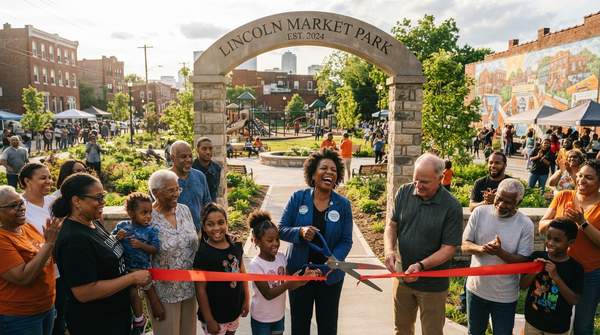
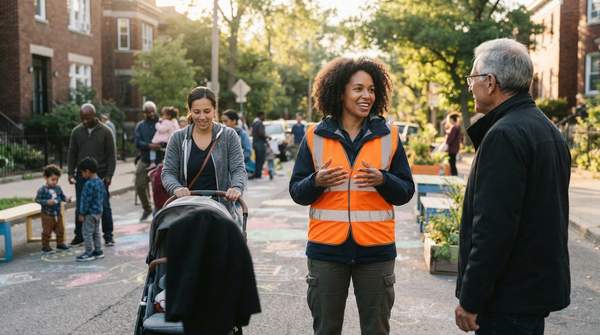
The Goebel Park Master Plan in Covington demonstrates this principle. The city launched a Virtual Open House, an accessible forum for public input on ideas and priorities. According to the City of Covington, the goal is to guide future improvements to amenities, connectivity, and accessibility. A city official stated, "Goebel Park has long been a cornerstone of our community, and this planning effort ensures its future reflects the needs and aspirations of our residents." Seeking community feedback ensures the investment serves everyone.
Acknowledging the Costs: Parks vs. Pressing Needs
Municipal investment discussions must acknowledge the counterargument: with limited resources, city leaders face difficult choices. Is it irresponsible to divert funds to parks when aging infrastructure, strained public safety budgets, and affordable housing needs persist? Is a new playground more important than a new water main, or a walking trail a higher priority than housing development?
This line of reasoning presents a false dichotomy. It frames green space as an amenity that competes with necessities, rather than as an integral part of a healthy urban ecosystem that supports them. As the examples from Shelby Township and Richardson demonstrate, strategic investment in green infrastructure is not at odds with fiscal responsibility or development; it is a component of it. Shelby Township’s long-standing, stable millage rate proves that park maintenance can be a predictable, manageable part of a municipal budget, not a volatile luxury. The Richardson TIF model shows how green space can be financed by the very economic growth it helps to stimulate, creating a virtuous cycle of investment and return.
The argument that land for parks would be better used for housing also misses a crucial point. Simply building more units does not create a community. Without accessible places for recreation, social gathering, and respite from the concrete jungle, dense urban environments can become stressful and isolating. The Richardson project is valuable precisely because it combines housing with a public green space and direct access to a 4.2-mile trail. This integration makes the housing more attractive and the community more livable, ultimately leading to a more successful and sustainable development. The goal should not be to choose between parks and housing, but to demand development that thoughtfully includes both.
Deeper Insight: Green Space as Essential Urban Infrastructure
Parks must be viewed as essential, multi-purpose infrastructure, not merely recreational amenities. After years covering housing and real estate, I believe this conceptual shift is critical. Parks are as vital to a city’s function as roads, sewers, and power grids—a practical framework for 21st-century urban planning.
Consider the functions of this "green infrastructure." It is a public health system that mitigates extreme heat, filters air pollution, and provides measurable mental and physical health benefits. It is a stormwater management system that absorbs rainfall, reduces runoff, and lessens the burden on gray infrastructure. It is an economic development tool that increases property values, attracts skilled workers, and supports local businesses. And it is a social infrastructure that provides the space for community bonds to form and strengthen.
Data from around the world shows a direct correlation between green space and resident satisfaction. A global survey of 24,000 people by Time Out, reported by timeout.com, found cities lauded for nature access are also seen as highly desirable places to live.
| City | Green Space Access Approval Rating | Key Green Metrics |
|---|---|---|
| Bath, UK | 94% | Reportedly topped the global survey for green space access. |
| Riga, Latvia | 87% | Reportedly has 47% of its land as green space and 39% as tree cover. |
Well-planned cities, like Riga with its impressive 47 percent green space, demonstrate that livability is a product of deliberate, long-term design, not chance. Inequities in Los Angeles result from treating parks as an afterthought, while cities like Bath and Riga succeed by integrating them as a core component of the urban fabric.
What This Means Going Forward
Proactive, equitable, and integrated planning is essential. Covington's community-centric Goebel Park Master Plan offers a model for regional replication in new developments and neighborhood revitalization projects. This process goes beyond aesthetic choices, fundamentally seeking to understand how residents use public space and what they need to thrive.
As residents, we must become more discerning consumers of urban development. When a new project is proposed, we should ask critical questions. Is public green space included? Is it truly accessible to everyone, or is it a privatized amenity for a select few? How is it being funded, and how will it be maintained? We should champion creative solutions like public-private partnerships and advocate for budget priorities that reflect the long-term value of green infrastructure.
The data strongly suggests that cities that continue to treat green space as a low-priority expense will pay a higher price down the road—in public health crises, in diminished economic competitiveness, and in a fraying social fabric. Conversely, the cities that embrace green space as essential infrastructure will become the magnets for talent, investment, and community in the decades to come. The conversation happening now around Goebel Park is more than a plan for a single park; it is a referendum on what kind of city we want to be. The evidence is clear. The choice is ours.