Business Spotlights

The Flexible Work Shift: How Co-working Spaces Are Reshaping Local Business Districts

The predictable 9-to-5 rhythm of our cities has been replaced by a more dynamic urban pulse, as co-working spaces and flexible work reshape our local business districts.

MA
Marco Alvarez

April 1, 2026 · 6 min read

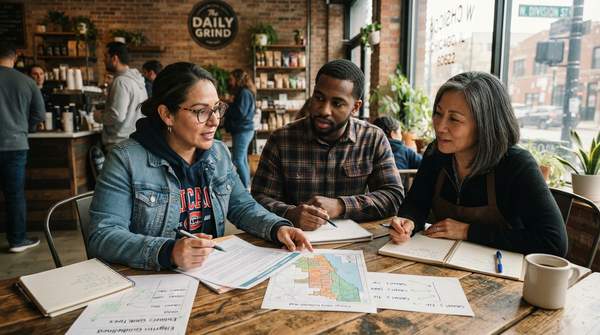
A vibrant co-working space with diverse professionals collaborating, seen through large windows overlooking a revitalized city street, symbolizing the integration of flexible work into urban life.

Just a few years ago, the rhythm of our local business districts was predictable. Morning rushes filled downtown streets and coffee shops, monolithic office towers hummed with activity from nine to five, and an evening exodus marked the end of the workday. Today, that rhythm has changed. The rise of co-working spaces and flexible work reshaping local business districts has created a new, more dynamic urban pulse, replacing the rigid commute with a fluid movement of people working from neighborhood hubs, redesigned offices, and hybrid commercial spaces. This isn't just a temporary adjustment; it's a fundamental restructuring of our commercial and community landscapes.

What Changed: The Catalyst for a New Commercial Era

The traditional model of commercial real estate, built around long-term leases for single-use office buildings, began to show its age long before recent global disruptions. However, a confluence of powerful forces accelerated its transformation. According to an analysis by Vocal.media, the primary catalysts are the widespread adoption of hybrid work models, the relentless growth of digital commerce, and fundamentally changing urban lifestyles. Businesses no longer require every employee to be in one central location every day, and employees increasingly demand flexibility in where and when they work. This shift in demand created a critical inflection point for commercial property.
The old model, which tethered corporate identity to a prestigious downtown address, became less practical. Companies began questioning the expense of maintaining vast, often underutilized, office footprints. Simultaneously, technology provided the tools for effective remote collaboration, with platforms from major tech companies like Microsoft, which offers a service called 'Copilot Cowork', making distributed teams more viable than ever. This technological enablement, combined with a cultural shift toward work-life balance, broke the old paradigm. The result is a market that is now rapidly reorganizing itself around principles of flexibility, adaptability, and mixed-use functionality, moving away from the siloed districts of the past.

How Flexible Work Arrangements Reshape Urban Centers

The transformation of our urban centers is best understood by comparing the old commercial real estate model with the new one taking its place. The "before" picture was one of rigidity and concentration. Business districts were dominated by single-purpose skyscrapers where companies signed leases for five, ten, or even fifteen years. This model created a dependency on a massive daily influx of commuters, which in turn supported a specific ecosystem of services like lunch counters, dry cleaners, and happy-hour bars, all operating on a compressed schedule. The value of a property was tied almost exclusively to its proximity to the central business core.

Today, a more distributed and agile model is emerging. The numbers tell a compelling story of a market in flux, yet poised for significant growth in new directions. The overall commercial real estate market, valued at USD 6.35 Trillion in 2026, is forecast to expand to USD 8.48 Trillion by 2031, as reported by Vocal.media. This growth, however, is not happening in the traditional sectors. Instead, it's being driven by the expansion of flexible office environments and the development of mixed-use properties. Underutilized office buildings are now being reimagined. Vocal.media notes a distinct trend where these structures are redesigned into dynamic hybrid spaces that blend private offices, retail storefronts, co-working hubs, and even residential units. This shift decentralizes economic activity, spreading it from the downtown core into surrounding neighborhoods. The impact of this can be seen in how remote work affects housing demand and property values, as people seek to live in communities that offer a blend of life and work amenities.

This structural change can be summarized by a few key metrics that highlight the new reality for businesses and property owners.

MetricTraditional Model (Before)Flexible Model (Now)
Lease Term5-10+ years, fixedMonthly, daily, or on-demand
Space UtilizationSingle-tenant, single-purpose officeMulti-tenant, mixed-use (co-working, retail, residential)
Geographic FocusCentral Business District (CBD)Distributed network of neighborhood hubs
Primary Value DriverPrestige of a central addressFlexibility, amenities, and community access

Impact of Co-working Spaces on Local Business Districts: Winners and Losers

Like any significant economic shift, the rise of flexible work creates a new set of winners and losers. The entities thriving in this new environment are those that embrace adaptability and cater to the needs of a distributed workforce. Co-working space operators, from global brands to local, boutique providers, are obvious beneficiaries. They act as intermediaries, absorbing the risk of long-term leases from landlords and offering businesses the flexible, scalable solutions they now demand.

Another major winner is the local neighborhood economy. When professionals work from a co-working space in their own community or a nearby suburb, their daily spending on coffee, lunch, and after-work errands shifts with them. This injects new life into neighborhood commercial strips that were previously quiet during weekdays. Small businesses in these areas now have a consistent daytime customer base, fostering a more resilient and vibrant local economy. Property developers who proactively convert aging office stock into sought-after mixed-use properties are also capitalizing on the trend, creating integrated environments where people can live, work, and play.

Perhaps the most significant, though less visible, winners are in the logistics and data infrastructure sectors. With the boom in digital commerce and remote work, the demand for warehouses, distribution centers, and data storage facilities has surged. According to Vocal.media's analysis, logistics hubs and data-center facilities are emerging as some of the most sought-after property assets in the current market. On the other side of the ledger are the traditional players who have been slow to adapt. Landlords of older, Class B and C office buildings in downtown cores face the greatest challenge, with rising vacancy rates and declining asset values. The business model that relied on locking in a single large tenant for a decade is no longer viable for many. Similarly, retailers and service providers located in the ground floor of these towers, who depended entirely on office worker foot traffic, are struggling to survive as that traffic becomes less predictable.

Future Trends in Flexible Work and Business Districts

So, where is this trend headed? Let's delve into the expert outlook. Analysts see this not as a cyclical change but a permanent, structural evolution in commercial real estate. The long-term viability of the flexible office model is underscored by market research firms like Fortune Business Insights, which provides market size and share analysis for dedicated flexible office spaces extending well into the next decade, to 2034. This indicates strong confidence among investors and industry experts that the demand for flexible solutions is here to stay.

The future of the business district appears to be one of decentralization and diversification. The "hub-and-spoke" model is gaining traction, where a company maintains a smaller central headquarters (the hub) for collaborative events and brand presence, while employees are given access to a network of smaller satellite offices or co-working spaces closer to their homes (the spokes). This model offers the best of both worlds: it preserves corporate culture and collaboration while providing the flexibility employees desire.

We can also expect to see a continued "flight to quality," where businesses that do maintain a physical office presence will opt for modern, amenity-rich buildings that serve as a destination to attract and retain talent. These buildings will be more than just a place to work; they will be integrated environments with high-end fitness centers, diverse food options, green spaces, and seamless technology. The integration of work, life, and community is the defining trend that will shape the urban centers of tomorrow, transforming them from monolithic work zones into vibrant, multi-functional ecosystems that operate around the clock.

Key Takeaways

What does this mean for local consumers, business owners, and investors? The ongoing transformation of our business districts presents both challenges and significant opportunities. Understanding the key drivers is essential for navigating the path forward.

  • The shift to flexible work is a permanent restructuring of commercial real estate, not a temporary fad. Market forecasts show significant growth, but this growth is concentrated in new, adaptable models like mixed-use properties and flexible office spaces.
  • Adaptability is the new currency. The winners in this new era will be property owners who creatively repurpose underutilized buildings, local businesses that cater to a distributed workforce, and companies that embrace flexible work models to attract top talent.
  • The Central Business District is not dead, but its role is being fundamentally redefined. It is evolving from a single-purpose zone for work into a multi-functional hub for living, innovation, culture, and recreation, requiring a more diverse mix of property types.
  • The backbone of the new economy is increasingly digital and logistical. The rising importance of data centers and logistics hubs as prime commercial real estate assets highlights the deep connection between our physical spaces and the digital-first world.