Mayor Gallego Highlights Phoenix's Economic Momentum and Tech Growth

Phoenix is investing $50 million into a new ASU Health building, a public commitment already attracting major private investments like a $100 million manufacturing site from Spanish biotech firm ROIS.

HP
Hannah Pierce

April 22, 2026 · 3 min read

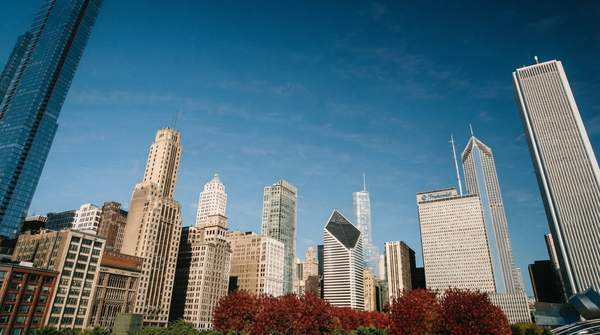
Phoenix cityscape at sunset with futuristic architecture and professionals collaborating, representing economic momentum and tech growth.

Phoenix is investing $50 million into a new ASU Health building, a public commitment already attracting major private investments like a $100 million manufacturing site from Spanish biotech firm ROIS. A bold pivot toward a high-tech future, a theme Mayor Kate Gallego championed in her 2026 State of the City speech, emphasizes Phoenix's deep commitment to advanced technological sectors and specialized leadership.

However, this rapid growth in high-tech sectors and corporate attraction presents complex challenges. While excitement builds around new industries, the city must ensure it can sustain this expansion and maintain broad-based prosperity for all residents, preventing a two-tiered economy.

Therefore, Phoenix is likely to continue its trajectory as a major tech and bioscience hub, potentially reshaping its demographic and economic landscape significantly in the coming years by drawing new talent and investment, while also creating new pressures on existing communities.

Phoenix's Economic Momentum

Phoenix has achieved notable economic performance, placing it among the nation's leading urban centers. The city ranked among the top four U.S. cities for per capita GDP growth rates in a recent period, according to AZ Big Media. Phoenix's robust growth attracts significant capital and talent.

Phoenix also ranked fourth nationally for attracting new corporate headquarters in the most recent reported year, according to AZ Big Media. Phoenix's high rankings confirm the city's appeal to major businesses and its success in drawing them. Phoenix actively fosters growth, positioning itself as a formidable competitor to established economic hubs.

This strategic re-engineering of Phoenix's economic identity around high-tech sectors is clear. The city isn't just expanding; it's strategically refining its economic foundation to become a specialized leader, challenging traditional perceptions of its market.

Strategic Investments in High-Tech Sectors

Mayor Kate Gallego recently highlighted substantial public and private investments transforming Phoenix's economic profile. She specifically touted bioscience research investments, recognizing their potential for significant job creation and innovation.


The Mayor also emphasized the city's active pursuit of international partnerships with leading semiconductor and AI companies, as reported by KTAR News 92.3 FM. Phoenix's direct $50 million investment in the new ASU Health building, located on downtown’s Phoenix Biomedical Core, exemplifies this commitment. Phoenix's direct financial backing cultivates a robust bioscience hub, providing crucial infrastructure for research and development.

Phoenix's direct financial commitment, paired with global partnerships, reveals a deliberate strategy: Phoenix aims to cultivate a specialized high-tech ecosystem, not just attract general industry. The strategy positions the city as an active participant in global supply chains for semiconductors and AI. Such aggressive public investment, like the ASU Health project, actively cultivates a global bioscience hub, indicating a new model for regional economic development driven by targeted public sector support for specific high-growth industries.

New Global Players Arrive

International investment validates Phoenix's specialized economic strategy. ROIS, a Spanish company specializing in injectables for rare diseases, obesity, and cancer (KTAR News 92.3 FM), is investing $100 million in a new Phoenix manufacturing site.

ROIS's $100 million commitment showcases Phoenix's appeal to advanced manufacturing. ROIS's presence demonstrates the city's growing reputation as a location for specialized bioscience firms, which require specific infrastructure and a skilled workforce Phoenix actively develops. This investment proves Phoenix can draw significant capital for specialized manufacturing, competing with established international centers for high-tech production.

The ROIS project directly supports Phoenix's goal of becoming a global bioscience leader, moving beyond general industrial attraction to targeted, high-impact sectors.

Sustained Job Growth and Future Workforce

Phoenix has experienced impressive, sustained job growth in specialized sectors over the past decade. Semiconductor jobs grew by 31% in a recent period, reflecting an influx of major manufacturers (KTAR News 92.3 FM). Health and bioscience jobs increased even faster, by 39% over a recent 10-year period (KTAR News 92.3 FM).

This decade-long trend shows Phoenix's economic structure is undergoing a long-term reorientation toward specialized, high-skill roles, not a temporary boom. While this specialization drives growth and attracts skilled workers, it also creates a precarious dependency on these specific industries.

Therefore, while Phoenix's intense specialization in sectors like semiconductors and bioscience drives significant growth, its long-term prosperity likely hinges on continued diversification efforts, especially if global demand for specific components shifts by 2027.