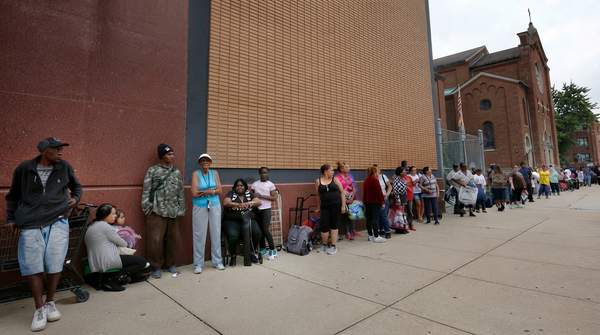
If you are facing food insecurity in Chicago, your two main options serve different needs: the SNAP program provides ongoing monthly benefits on a card you use like a debit card for groceries, while the city's food pantry network offers free food right away, with no application wait. Most residents who need lasting help with a grocery budget should apply for SNAP through the Illinois Department of Human Services (IDHS), and anyone who needs food today can get it through one of the more than 850 food pantries, soup kitchens, shelters and other community partners coordinated around the Greater Chicago Food Depository. Many households use both at once, and nothing stops you from visiting a pantry the same week you start a SNAP application.
Understanding Food Assistance in Chicago: SNAP vs. Food Pantries
The two systems are built on different foundations. SNAP is a federally funded, state-administered program run by IDHS, which means access depends on an application and an eligibility determination. Food pantries, by contrast, are operated by local community organizations — churches, shelters, neighborhood centers — and many distribute food directly to whoever shows up. The Greater Chicago Food Depository acts as the central food bank for this network, supplying partner sites across Chicago and Cook County and maintaining the search tools residents use to find them.
This distinction matters because it drives everything else: how quickly you get help, what paperwork you need, and what you actually receive. SNAP delivers money for groceries over time; a pantry delivers groceries or a prepared meal in the moment. Neither is a substitute for the other, which is why the practical question is not "which one?" but "which one first?"
SNAP: Ongoing Support for Groceries
SNAP — the Supplemental Nutrition Assistance Program — is the country's largest food benefit program, and IDHS administers it in Illinois. Approved households receive monthly benefits loaded onto an Illinois Link Card, which works like an EBT debit card for purchasing eligible food items at authorized retailers. The benefit is designed to supplement a household's grocery budget so low-income individuals and families can afford nutritious food, not to cover it entirely.
Eligibility hinges mainly on your household — the number of people who live and eat together — and your income. IDHS publishes gross monthly income guidelines, effective October 2025, showing the highest income a household can have and still qualify. Gross income means your total monthly income from all sources before any deductions, and IDHS notes these amounts are only guidelines and do not apply to all households; different guidelines apply for seniors and people with disabilities. Noncitizens can find specific eligibility information through IDHS and the We Got You Illinois campaign.
Maximum Gross Monthly Income Guidelines by Household Size (October 2025)
| People in household | Maximum gross monthly income |
|---|---|
| 1 | $298 |
| 2 | $546 |
| 3 | $785 |
| 4 | $994 |
| 5 | $1,183 |
| 6 | $1,421 |
| 7 | $1,571 |
| 8 | $1,789 |
| 9 | $2,007 |
| 10 | $2,225 |
For households larger than 10, IDHS adds $218 for each additional person. If your income falls near or below these figures, it is worth applying — and remember these are guidelines, not automatic cutoffs, so an application is the only definitive answer. IDHS also offers an online SNAP eligibility calculator if you want a preliminary read.
How to Apply for SNAP Benefits in Illinois
Chicago residents have two main routes to apply. The fastest is online, using the state's Application for Benefits Eligibility, or ABE, at abe.illinois.gov, which IDHS says is available to use anytime and covers SNAP, cash and medical assistance in one place. The same portal is worth knowing about even if food is your only concern, because housing-related and cash supports flow through related state programs.
If you prefer paper, IDHS publishes form IL444-2378 B — Request for Cash Assistance, Medical Assistance, Supplemental Nutrition Assistance Program — with a Spanish-language version available. IDHS's guidance is encouraging on this point: fill in as much as you can, and if you cannot answer every question, that is okay — but you must include your name and address. If filling out an application feels overwhelming, the Greater Chicago Food Depository offers help with applying for SNAP and other benefits, so you do not have to navigate the process alone.
One frequently asked question deserves a direct answer, though this article cannot provide legal advice: The We Got You Illinois campaign clarifies that, under current law, enrolling in SNAP does not impact one's ability to remain in the United States, obtain or retain a green card or permanent resident status, or become a U.S. citizen. Because lawmakers have discussed changing this in the past and could again, We Got You Illinois recommends talking to a trusted source — it points to Protecting Immigrant Families Illinois and the Illinois Coalition for Immigrant and Refugee Rights for current information.
Local Food Pantries: Immediate Help and Community Resources
Food pantries fill the gap SNAP cannot: they hand you food now, with no determination period. Through the Greater Chicago Food Depository's network, residents can get help finding food and accessing programs at over 850 food pantries, soup kitchens, shelters and other community partners across the Chicagoland area. Offerings vary by location — free groceries, a meal, or both — and individual sites set their own schedules, which is why this guide directs you to the official finders rather than listing addresses that quickly go out of date.
Some neighborhood pantries go further. Chicago's northwest side, for example, is served by organizations that combine a pantry with hot meals, home delivery for residents who cannot travel, and public benefits assistance to help guests sign up for SNAP in the same visit. That combination illustrates the two systems working together: a pantry feeds you this week while helping you build a longer-term benefit.
One Chicago-specific note for families: Chicago Public Schools states that all CPS students continue to receive free breakfast and lunch at school every day, and CPS maintains a resources document matching school locations with nearby food, shelter and medical care options.
Finding Food Assistance: Your Step-by-Step Guide
If you need food and do not know where to begin, these steps will take you from search to a bag of groceries:
- Search the Food Depository's map. The Greater Chicago Food Depository's online search lets you find free groceries or a meal at a pantry or food assistance program near you across Chicago and Cook County.
- Check the We Got You Illinois directory. For hours, locations and information on all available Cook County and Chicago food pantries, meal programs and distribution partners, Chicago Public Schools directs families to the We Got You Illinois website.
- Call for live help if you prefer a person. Call the Greater Chicago Food Depository and press "0" to be connected directly to 2-1-1 Metro Chicago, a free, confidential referral helpline available 24/7/365 to all Cook County residents. It handles health and social service referrals beyond food — including job referrals and training programs — and is a good option when a website search feels overwhelming or your situation is complicated.
- Ask about more than food. When you contact a pantry or the helpline, ask whether the site offers SNAP application assistance; many partner locations do, and starting that process at the pantry means one trip covers both needs.
SNAP vs. Food Pantries: A Quick Comparison for Chicago Residents
Placing the two systems side by side makes the decision boundary visible. The table below compares them across the dimensions that actually determine which door to knock on first.
| Dimension | SNAP | Food Pantries / Food Programs |
|---|---|---|
| Type of aid | Monthly financial benefits on an Illinois Link Card for eligible food items at authorized retailers | Free groceries or prepared meals handed to you directly; offerings vary by location |
| Administering body | Federally funded program run by the Illinois Department of Human Services | Local community organizations, often supplied through the Greater Chicago Food Depository |
| How to access | Apply online via ABE (abe.illinois.gov) or on paper form IL444-2378; free application help is available from the Food Depository | Find a site via the Food Depository's map, the We Got You Illinois directory, or 2-1-1 Metro Chicago |
| Typical eligibility | Household income limits by size, effective October 2025; different guidelines for seniors and people with disabilities; an application is required | Varies by site — many serve anyone who comes; hours and requirements differ by location |
| Best for | Ongoing, consistent support supplementing a household's grocery budget | Immediate need: food today, plus referrals to other services |
The verdict that follows from this comparison: if you need food this week, start with a pantry or a call to 2-1-1, because there is no waiting period. If you need help affording groceries month after month, start the SNAP application — and the two paths converge, since pantry staff and the Food Depository can help you apply. If your need is both urgent and ongoing, do both in the same week.
Your Next Steps to Food Security in Chicago
Chicago residents facing food insecurity should first assess whether their need is immediate (a food pantry) or for ongoing grocery support (SNAP), then use the provided resources to take action. Concretely: search the Greater Chicago Food Depository's map or call and press "0" for 2-1-1 Metro Chicago to locate a pantry, and if your household income is at or below IDHS's October 2025 guidelines, begin an ABE application online — or ask a pantry site for application help. The measure of success is simple: a submitted SNAP application or a completed visit to a local food pantry. Whichever step you take first, the network of more than 850 partner sites across Chicagoland and the state's benefit system exist so that no one in this city has to go without a meal to figure out what comes next.
Sources
- IDHS: Supplemental Nutrition Assistance Program - SNAP
- Food Depository in Chicago — Greater Chicago Food Depository
- IDHS: 124 - SNAP Program
- Supplemental Nutrition Assistance Program — We Got You Illinois
- IDHS: Cash, SNAP & Medical Assistance
- Chicago Food & Support — Greater Chicago Food Depository
- Supplemental Nutrition Assistance Program (SNAP) — CPS