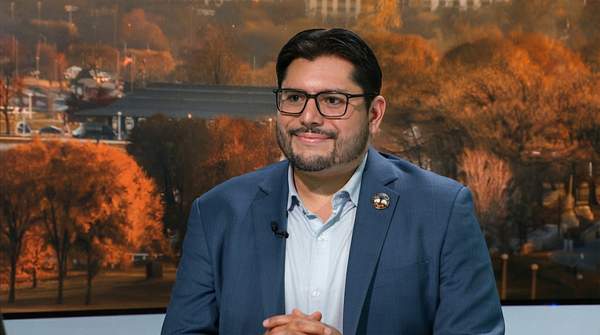
Chicago Park District General Superintendent and CEO Carlos Ramirez-Rosa presented a proposed $654.8 million operating budget for 2027 that closes a projected $36 million shortfall while adding new spending on arts, youth, and special recreation programming — and, in a recent interview, he laid out a contingency plan for keeping Soldier Field profitable even if the Chicago Bears leave. The proposed budget, a 2.7% increase over last year, awaits a final board vote in December 2026.
Chicago Park District Proposes $654.8 Million 2027 Budget Amid Financial Headwinds
Ramirez-Rosa presented the plan at a public board meeting on November 19, telling the board it closes a projected $36 million shortfall through roughly $6 million in identified savings and efficiencies paired with modest revenue adjustments. According to the district's announcement, the plan marks the fifth consecutive year the district has balanced its books without relying on prior-year fund balance. The proposal also includes a $3 million supplemental pension contribution beyond the required $66.4 million payment, $1 million for air conditioning upgrades at fieldhouses, and a new Department of Employee Mental Health Support.
"We entered this budget season facing a $36 million deficit," Ramirez-Rosa said on WTTW's "Chicago Tonight." "Most of our funding comes from property taxes." The revenue adjustments include a property tax change that amounts to about $212 for the average Chicago homeowner, as reported by Chicago City Wire's coverage of the hearing.
Strategic Investments in Arts, Culture, and Youth Programming
Despite the shortfall, the district's budget announcement and accompanying public highlights detail a set of targeted new investments in arts and cultural programming. These include 16 additional staff positions for the Young Cultural Stewards program, $100,000 to expand Night Out in the Parks and Movies in the Parks, $46,000 for materials for cultural centers, and $40,000 for arts programming training and materials, according to the district's own budget highlights.
The proposal also directs a $1.3 million special recreation levy investment toward inclusion aid services, which the district says will expand opportunities for residents with disabilities. In his announcement, Ramirez-Rosa framed the spending as protection of core services rather than expansion for its own sake: "The 2027 proposed budget protects the essential services that Chicagoans depend on, continues the investments we have made in our communities, and positions the District for long-term financial stability."
Addressing a $36 Million Shortfall and Future Uncertainties
Even with the 2027 plan balanced on paper, the district faces pressures that reach beyond this budget cycle. The union representing district employees is among the many municipal unions with contracts that expire in the next year, creating uncertainty about future labor costs. Ramirez-Rosa, whose contract was recently extended through 2029, will lead the district through those negotiations.
The larger question mark is Soldier Field. The possibility of the Chicago Bears leaving the lakefront stadium threatens a major source of revenue for parks across the city. The Bears' potential relocation is being discussed from the Park District's perspective here; the team's own position on a move is not represented in the district's statements. What is clear from the CEO's account is the scale of what is at stake — revenue he describes as funding park services in every Chicago neighborhood.
Soldier Field's Future: A Contingency Plan Without the Bears
In the "Chicago Tonight" interview, Ramirez-Rosa said the district is actively preparing for a future without the team, even as it hopes to keep the Bears in the city. "The stadium generates tens of millions of dollars, and that money goes towards supporting park services and park programming in every single neighborhood in Chicago," he said. "So the Chicago Park District needs that stadium revenue, and the city of Chicago needs a major stadium to drive the local tourism company."
"We believe the Bears belong in Chicago, we are hopeful we can figure out a way to accomplish that. But if they leave, we know that Soldier Field can remain a viable stadium," Ramirez-Rosa said. His contingency plan centers on major live entertainment: "If the Bears go to Arlington Heights, or if they go to Hammond, Indiana, we believe that Soldier Field can remain a viable stadium that hosts Taylor Swift, Beyonce, and continues to generate money that supports parks across the city."
Chicago Park District's 2027 Budget: Balancing Challenges with Community Investments
The table below juxtaposes the district's major financial pressures against the specific new spending initiatives in the proposed budget, illustrating the strategic choices made within tight fiscal constraints.
| Category | Budgetary Item | Details |
|---|---|---|
| Challenge | Total budget and shortfall | $654.8 million proposed operating budget, a 2.7% increase, closing a projected $36 million shortfall — the fifth consecutive year without relying on prior-year fund balance. |
| Challenge | Revenue adjustments | Shortfall closed through roughly $6 million in savings and efficiencies plus a property tax adjustment of about $212 for the average homeowner. |
| Challenge | Expiring contracts | The union representing district employees is among municipal unions with contracts expiring in the next year, posing future cost uncertainty. |
| Challenge | Soldier Field revenue | A potential Bears departure threatens tens of millions of dollars in stadium revenue that supports park services citywide. |
| Investment | Young Cultural Stewards | 16 additional staff positions for the youth arts program. |
| Investment | Night Out in the Parks / Movies in the Parks | $100,000 expansion. |
| Investment | Cultural centers | $46,000 for materials. |
| Investment | Arts programming | $40,000 for training and materials. |
| Investment | Special Recreation | $1.3 million special recreation levy investment in inclusion aid services for residents with disabilities. |
| Investment | Facilities and staff | $1 million for fieldhouse air conditioning upgrades and a new Department of Employee Mental Health Support. |
The comparison shows a district directing modest, targeted dollars toward community programming while managing a shortfall several times larger than any single new investment. The dollar amount for the Special Recreation inclusion services is the one new investment listed at the $1.3 million levy level; other line items in the full $654.8 million breakdown are not detailed here.
Looking Ahead: Soldier Field's Future and Budget Approval
The Chicago Park District is actively planning for Soldier Field's continued financial viability through major events, regardless of the Chicago Bears' long-term decision, while awaiting final board approval for its 2027 budget. The board is scheduled to vote on the proposal in December 2026; until then, all figures remain proposed rather than final.
For Chicago residents and taxpayers, two things are worth watching: the December 2026 board vote on the $654.8 million plan, including the roughly $212 average-homeowner property tax adjustment, and future announcements regarding Soldier Field event bookings — the measurable indicator of whether the CEO's concert-and-events contingency can replace tens of millions in Bears revenue if the team departs.
Sources
- Park District Superintendent and CEO Ramirez-Rosa Presents the 2027 Proposed Budget — Chicago Park District
- Chicago Park District CEO on $655M Budget, Programming and the Future of Soldier Field — WTTW News
- Chicago Park District proposes $654.8 million 2027 budget, public hearing draws dozens of speakers - Chicago City Wire