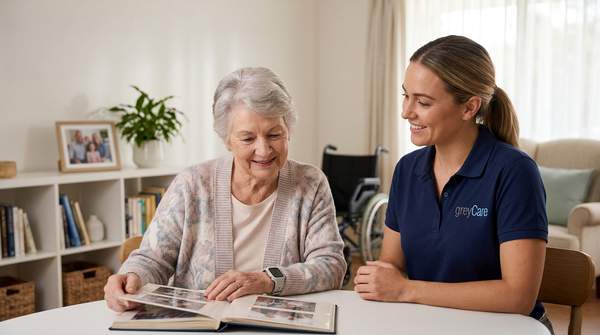
As the United States moves through what researchers call "Peak 65," families are increasingly navigating questions about how to support aging parents and other loved ones. LIMRA reports that more than 4.1 million Americans are turning 65 each year through 2027, with 2025 representing the peak of this demographic shift.
For families in New Jersey, that does not necessarily mean choosing between managing care alone and moving a loved one into a residential setting. Professional in-home care can provide practical assistance while allowing seniors to remain in familiar surroundings.
Based in Toms River, Award Homecare provides professional senior care and companionship services throughout Monmouth and Ocean County. Its approach centers on individualized care plans, caregiver matching, dedicated case management, and registered-nurse oversight.
For families, that combination addresses an important consideration: senior care should be built around the individual receiving it rather than simply assigning a standard schedule of services.
Personalized Companion and Specialized Memory Care
Every senior has different routines, preferences, abilities, and support requirements. Someone who needs assistance with bathing and mobility may require a very different arrangement from someone who primarily needs companionship, transportation, reminders, or supervision related to memory loss.
Award Homecare offers a range of services intended to accommodate those differences. Its service options include assistance with daily living, Alzheimer's and dementia care, senior companionship, hourly care, overnight care, live-in care, and facility companion care.
The company's Connect to Care approach is central to this model. Award Homecare says it matches caregivers to clients according to their needs and personalities and develops individualized care plans intended to support daily life.
That emphasis on compatibility is important because home care is also a relationship. A senior may be more comfortable accepting assistance when the caregiver understands their personality, preferences, and routines.
Award Homecare's services include:
- Assistance with daily living: Support with activities such as bathing, grooming, mobility, transfers, and other personal-care needs, along with medication reminders.
- Alzheimer's and dementia care: Specialized non-medical support for seniors experiencing memory-related challenges, including assistance with routines and safety.
- Senior care and companionship: Conversation, shared activities, transportation, errands, and social engagement designed to help seniors remain connected.
- Flexible care arrangements: Hourly, overnight, and live-in options allow families to consider different levels of ongoing support.
- Facility companion care: One-on-one companionship for seniors living in assisted living facilities or nursing homes.
Award Homecare also provides services such as meal preparation, laundry, light housekeeping, grocery shopping, transportation, and assistance with errands.
Why Caregiver Compatibility Matters
When families begin looking for home care, the focus often falls on practical questions: How many hours are needed? What services are available? How much will care cost?
Those questions matter, but caregiver compatibility deserves attention too.
A caregiver may spend significant time with a senior, assisting with personal routines, accompanying them to appointments, preparing meals, or simply providing conversation and companionship. A good interpersonal fit can therefore be an important part of creating a comfortable care experience.
Award Homecare specifically describes matching caregivers according to a client's personality and needs. The company says its caregivers are rigorously selected, thoroughly vetted, and continuously trained before becoming part of a client's care team.
This focus also aligns with themes visible in the company's available customer feedback. Publicly accessible reviews frequently highlight caregiver compassion, professionalism, patience, reliability, and the relationships caregivers develop with clients.
Reviews cannot guarantee that every family will have the same experience. However, recurring feedback around caregiver quality and personal attention provides useful context for families evaluating what matters beyond a basic service list.
Keeping Families Connected Through Case Management
Senior care often involves more than the person receiving assistance. Adult children and other relatives may be coordinating schedules, communicating with caregivers, managing appointments, and trying to stay informed about a loved one's changing circumstances.
Award Homecare addresses this part of the process through dedicated case management. The company says every family receives a dedicated case manager who serves as a personal care coordinator.
The role can help families navigate the practical side of care while maintaining a consistent point of contact.
Communication is another area that Award Homecare emphasizes. Its website states that caregivers are trained to communicate clearly and consistently with families and provide regular updates.
That emphasis is particularly relevant for family members who cannot always be physically present. Knowing who to contact and how communication is handled can make the process of arranging care feel more manageable.
Available customer feedback also frequently mentions positive interactions with the Award Homecare office and staff, including responsiveness and communication. Together, those themes reinforce a broader positioning around caregiver support plus agency-level involvement, rather than simply providing a person for a scheduled shift.
Registered-Nurse Oversight Adds Another Layer of Support
Award Homecare also incorporates registered-nurse oversight into its care model. According to the company, every care plan is overseen by a registered nurse who monitors changing needs and supports professional supervision and care coordination.
For families, this adds another layer to the agency's structure. Instead of relying solely on the caregiver-client relationship, the model includes a case manager and professional nursing oversight as part of the broader care team.
It is important to distinguish this type of oversight from medical treatment. Award Homecare's services are centered on in-home senior support and non-medical assistance, while clients should continue working with their physicians and other healthcare professionals for medical diagnosis and treatment.
The value of professional oversight within a home-care agency is therefore primarily about care coordination, supervision, and maintaining an individualized approach as circumstances change.
Flexible Care for Different Family Situations
The amount of support a senior needs can vary considerably. Some families may need several hours of assistance during the week, while others may require overnight or live-in support.
Award Homecare provides several scheduling options to accommodate these differences. The company states that hourly care begins with four-hour shifts and a 20-hour weekly minimum, while overnight and live-in care are also available.
This flexibility can be useful when families are trying to establish a sustainable care arrangement rather than committing immediately to a single level of support.
For example, a senior who remains largely independent may benefit from companionship, transportation, meal preparation, and assistance with selected daily activities. A person with more substantial mobility or memory-related needs may require longer periods of caregiver support.
The appropriate arrangement depends on the individual's circumstances and should be evaluated with the family and relevant healthcare professionals where appropriate.
The Growing Importance of Home-Based Senior Care
The broader elderly-care market reflects the demographic changes taking place in the United States and around the world. Coherent Market Insights estimates that the global elderly-care market will grow from approximately $1.64 trillion in 2026 to $3.06 trillion by 2033. Its research estimates that home-care services will account for 39.1% of the global elderly-care market in 2026, while North America is projected to represent 41.3% of the market.
These global figures do not determine what any individual senior needs. They do, however, illustrate why flexible, home-based support has become an increasingly important part of the senior-care landscape.
For families in Monmouth and Ocean County, the practical question is more immediate: What type of support can help an aging loved one remain comfortable and supported in familiar surroundings?
Award Homecare's range of services gives families several options to consider, from hourly assistance and companionship to specialized memory care, overnight support, and live-in care.
What Families Should Look for in a Senior Care Agency
Choosing an in-home care provider involves more than comparing service menus. Families should consider how caregivers are selected, how clients are matched, how communication works, who coordinates the care arrangement, and how the agency responds when needs change.
Award Homecare's model addresses these considerations through its Connect to Care approach, caregiver selection and training, dedicated case management, consistent family communication, and registered-nurse oversight.
Families may also want to ask potential providers:
- How will you determine the senior's care needs?
- How do you match caregivers with clients?
- Who will the family contact when questions or concerns arise?
- How can the care schedule change if the senior's needs change?
- What services are included in the proposed care arrangement?
These questions can help families distinguish between an agency that simply provides caregivers and one that offers a broader care-coordination structure.
Why Award Homecare Can Be a Practical Option for New Jersey Families
Award Homecare brings together several elements that families commonly consider when evaluating professional senior care: personalized care planning, caregiver compatibility, flexible scheduling, communication, case management, and professional oversight.
Its local Toms River office serves families throughout Monmouth and Ocean County, and the company provides a free in-home assessment for families exploring their options. The agency's website lists New Jersey License #HP0314200 and its Toms River office at 2214 Route 37 East, Suite 9.
The company's approach is also grounded in the idea that senior care should remain personal. A caregiver's ability to provide practical assistance matters, but so do patience, communication, compatibility, and respect for the senior's routines and preferences.
For family members arranging care, having an agency that combines those personal considerations with structured coordination can make the process easier to navigate.
Families interested in exploring their options can contact Award Homecare to discuss their loved one's circumstances and arrange a free in-home assessment.
Frequently Asked Questions About Award Homecare
Is Award Homecare a licensed home-care provider?
Yes. Award Homecare's website lists New Jersey License #HP0314200 and identifies its office in Toms River, New Jersey.
What types of senior care does Award Homecare provide?
Award Homecare provides senior care and companionship, assistance with daily living, Alzheimer's and dementia care, hourly care, overnight care, live-in care, and facility companion care. Additional support includes services such as meal preparation, transportation, errands, laundry, and light housekeeping.
Does Award Homecare offer flexible scheduling?
Yes. Award Homecare offers hourly, overnight, and live-in care. Its website states that hourly care begins with four-hour shifts and has a 20-hour weekly minimum.
How does Award Homecare personalize care?
The company's Connect to Care approach focuses on matching caregivers with clients based on personality and needs and creating individualized care plans. Award Homecare also assigns each family a dedicated case manager and provides registered-nurse oversight of care plans.
Does Award Homecare accept long-term care insurance?
Award Homecare states that it accepts private pay and long-term care insurance and is in-network with Care Scouts. Families should confirm their individual policy's eligibility, benefits, and reimbursement requirements directly with their insurer and Award Homecare.
Where does Award Homecare provide services?
Award Homecare is based in Toms River and serves communities throughout Monmouth and Ocean County. Its website lists numerous communities across both counties among its service areas.