Yes, Cook County homeowners can hold more than one property tax exemption at the same time, and stacking them is the single most reliable way to shrink a residential tax bill without filing an appeal. The county's own guidance confirms that many homeowners qualify for more than one exemption, and the Cook County Treasurer's Office lets you verify what you are already receiving and apply for anything you missed in prior years. This guide covers the four best-documented exemptions for residential owner-occupants — Homeowner, Senior Citizen, Senior Freeze, and Persons with Disabilities — how each is applied for and renewed, and how to recover retroactive savings.
Understanding Cook County Property Tax Exemptions
Exemptions do not work like coupons deducted from your bill. Instead, each one reduces the Equalized Assessed Value (EAV) of your home, and that EAV is multiplied by the local tax rate to determine what you owe. The Cook County Treasurer's Office, which administers several of these programs alongside the Assessor's Office, explains that the Persons with Disabilities Exemption works exactly this way: the exemption lowers EAV, and the resulting bill depends on both the EAV and the tax rate.
Because the reductions apply to the same assessed value base, qualifying for a second or third exemption compounds the effect. A homeowner exemption trims EAV by a fixed amount; a senior exemption trims it again; and the Senior Freeze goes further by holding the EAV itself steady. The Assessor's Office notes that the freeze insulates a senior from rising EAVs, though it cautions that the total tax bill still depends on the tax rate, which the freeze does not control.
Key Property Tax Exemptions and Eligibility
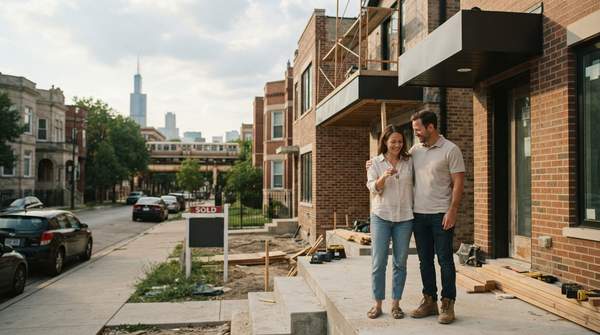
The Homeowner Exemption is the baseline break for owner-occupants of a primary residence. The Cook County Assessor's Office automatically renews it each year for properties that were not sold to new owners, so most people never need to reapply. In neighborhoods where assessments have risen sharply, the Treasurer's Office says the exemption can now be worth as much as $2,000, reflecting a $20,000 reduction in Equalized Assessed Value multiplied by the local tax rate.
The Senior Citizen Exemption applies to homeowners aged 65 or older regardless of income, and the Senior Freeze Exemption adds an income test on top of the age requirement. To qualify for the freeze, you must have owned and occupied the home on January 1 of the tax year, and household income must fall under the program's limit — reported at $65,000 for the 2025 tax year, rising to $75,000 for 2026. Unlike the other exemptions, the freeze must be reapplied for every year, because income can change. The Assessor's Office eases the paperwork for some applicants: those enrolled in 2024 in programs such as SNAP, LIHEAP, Aid to the Aged, Blind or Disabled, the Benefit Access Program, or the Senior Citizens Real Estate Tax Deferral Program can submit proof of enrollment instead of completing the income verification portion.
The Persons with Disabilities Exemption serves homeowners who cannot participate in substantial gainful activity due to a medically determinable physical or mental impairment. The home must be owned and occupied by the person with the disability, who must be liable for the property taxes on January 1 of the application year, and proof such as a Class 2 Illinois Person with a Disability Identification Card is required.