Airbnb reported that more people rented out their homes during the 2026 World Cup in Massachusetts than during the 2024 Paris Olympics, a surprising turn that underscores the immediate, grassroots economic impact of hosting major events. This unexpected scale of individual, local economic participation highlights how global spectacles can ripple directly into neighborhoods. Hotels in Greater Boston also generated 20% more revenue per room from June 12 to June 27 compared to the same period last year, indicating a significant hospitality surge. Furthermore, beer sales in Massachusetts bars and restaurants increased by more than 25% during the first two weeks of the tournament compared to the same time last year, showcasing widespread consumer activity.
While these figures paint a picture of immediate economic benefit, major events are proving to be immediate economic boons for local economies, but historical data shows they often fall short of long-term financial projections. This tension between current success and past disappointments fuels an ongoing debate about the true value of hosting such large-scale competitions. The discussion around leveraging major events for local economic opportunity in 2026, therefore, requires a careful look at both the present boom and historical lessons.
Cities hosting future major events will likely see significant short-term economic activity and community engagement, but should temper long-term financial expectations and focus on sustainable, broad-based benefits. This approach acknowledges the undeniable immediate windfall while guarding against the risk of inflated projections and post-event slumps. The goal shifts from merely attracting tourists to empowering local residents and businesses in lasting ways.
A Surge in Local Spending and Rentals
Visitor spending and the short-term rental market have experienced a considerable uplift during the initial phase of the World Cup in host cities. Demand for short-term rentals in Greater Boston increased by 9% during the first two weeks of the World Cup compared to the same period last year, according to WBUR. The 9% increase in demand for short-term rentals indicates a strong draw for out-of-town visitors seeking local accommodations.
- 9% — increase in demand for short-term rentals in Greater Boston during the first two weeks of the World Cup compared to the same period last year, according to WBUR (2026)
- $300-$350 — average short-term rental rates per night in the Boston area during the World Cup, representing an increase of roughly 25% compared to last year, according to WBUR (2026)
- 16.7% — year-over-year increase in consumer spending by non-local visitors in host cities, according to Forbes (2026)
- 6.3% — year-over-year increase in overall card-based purchases across the 16 World Cup host cities, according to Forbes (2026)
The significant rise in rental demand, prices, and non-local consumer spending indicates a strong draw for out-of-town visitors, directly benefiting local property owners and the broader visitor economy. The significant rise in rental demand, prices, and non-local consumer spending provides a clear snapshot of the immediate economic uplift experienced by host communities. These figures suggest that the World Cup has quickly translated into tangible financial gains across key sectors.
| Metric | Baseline (2025) | World Cup Period (2026) | Growth |
|---|---|---|---|
| Hotel Revenue per Room (Greater Boston) | X | +20% | 20% |
| Short-Term Rental Demand (Greater Boston) | Y | +9% | 9% |
| Average Short-Term Rental Rate (Boston Area) | $240-$280 | $300-$350 | ~25% |
| Beer Sales (Massachusetts Bars/Restaurants) | Z | +25% | 25% |
| Non-Local Visitor Spending (Host Cities) | A | +16.7% | 16.7% |
| Overall Card-Based Purchases (16 Host Cities) | B | +6.3% | 6.3% |
footnote: Data compiled from WBUR and Forbes, comparing current World Cup period to previous year's equivalent. Specific baseline values (X, Y, Z, A, B) not provided by sources, but growth percentages are direct.
Robust growth figures underscore the immediate financial injection into local economies. Hotels, short-term rentals, and consumer-facing businesses like bars and restaurants are experiencing a direct and substantial increase in activity. The data confirms the World Cup's powerful ability to stimulate spending and generate revenue across various local sectors, far beyond just ticket sales.
Beyond Revenue: Cultivating Community Spirit
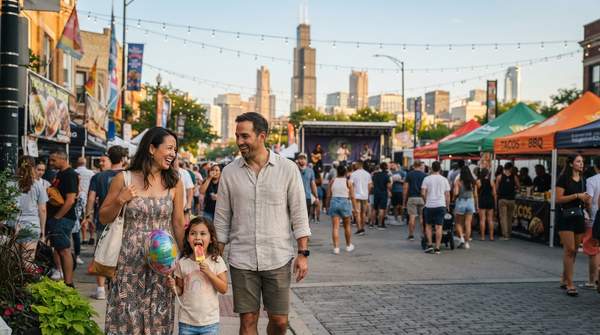
The City of Boston is actively fostering community engagement and supporting local businesses beyond direct tourism revenue through specific initiatives. The city is hosting six community watch parties for residents, families, and visitors during the summer, according to Boston. The six community watch parties aim to extend the World Cup's excitement into neighborhoods across Boston.
These free and family-friendly watch parties feature large viewing screens, live music, various activities, face painting, food vendors, and community programming. The free and family-friendly watch parties demonstrate a conscious effort by host cities to extend the event's positive impact beyond the stadiums. By bringing the World Cup's energy directly into communities, Boston aims to foster a shared spirit and provide accessible entertainment for all residents, not just those attending matches.
The events also aim to provide opportunities to support Boston's small businesses and local vendors, according to Boston. The aim to provide opportunities to support Boston's small businesses and local vendors ensures that the economic benefits are distributed more widely, allowing small enterprises to capitalize on the increased foot traffic and festive atmosphere. The watch parties and focus on local commerce demonstrate a conscious effort by host cities to extend the event's positive impact, fostering community spirit and supporting local commerce beyond ticketed venues.
The significant local participation in short-term rentals and community-driven initiatives like Boston's watch parties suggest that the true, often overlooked, economic and social legacy of mega-events might lie in empowering local residents and small businesses, rather than solely chasing tourist dollars. The significant local participation in short-term rentals and community-driven initiatives creates a more inclusive economic experience, ensuring that the benefits of hosting a global event reach diverse segments of the population.
Balancing Hype with Historical Reality
Based on historical data from the 1994 World Cup, cities celebrating current spending surges are likely repeating a cycle of over-optimism, failing to convert transient visitor dollars into sustainable economic growth.
- The 1994 World Cup's financial impact fell between $5.5 billion and $9.3 billion short of projections, according to economists cited by Forbes.
- Overall card-based purchases in the 16 World Cup host cities are up 6.3% year-over-year, according to Forbes.
- The events aim to provide opportunities to support Boston's small businesses and local vendors, according to Boston.
While current data from WBUR and Forbes shows strong short-term gains across hospitality and retail, past events highlight the persistent risk of overestimating long-term financial returns. The significant discrepancy between projected and actual economic impact of the 1994 World Cup serves as a cautionary tale for 2026 host cities. The significant discrepancy between projected and actual economic impact of the 1994 World Cup suggests that the immediate influx of consumer spending, while impressive, might not translate into lasting economic development. Overwhelming concentration of economic gains in hospitality and immediate consumption indicates that while the World Cup is a cash injection, it's not a catalyst for diversified economic development, leaving host cities vulnerable to a post-event slump.
The challenge for host cities now lies in converting this transient economic boost into something more enduring. Converting this transient economic boost into something more enduring involves strategically channeling visitor spending into local businesses and fostering community engagement that outlasts the tournament. Initiatives like Boston's watch parties, which specifically aim to support local vendors, represent a crucial approach to embedding more sustainable, inclusive economic benefits. Without such deliberate strategies, cities risk experiencing a significant economic dip once the global spotlight fades, failing to achieve the long-term prosperity initially envisioned.
The true legacy of hosting a major event like the World Cup hinges on whether cities can learn from past mistakes and prioritize sustainable, broad-based benefits over inflated financial projections. Learning from past mistakes and prioritizing sustainable, broad-based benefits means investing in infrastructure, supporting local entrepreneurship, and cultivating community pride that extends beyond the event itself. The focus should shift from merely counting tourist dollars to building resilient local economies that can thrive independently.
Key Takeaways for Future Event Hosting
- Immediate economic activity, such as a 20% increase in hotel revenue per room in Greater Boston, provides a significant but transient boost to local economies.
- Historical data from the 1994 World Cup shows a financial shortfall of $5.5 billion to $9.3 billion against projections, indicating a pattern of over-optimism in long-term economic impact.
- Community-focused initiatives, like Boston's six summer watch parties designed to support local vendors, are essential for distributing economic benefits and fostering sustainable engagement beyond the event's duration.