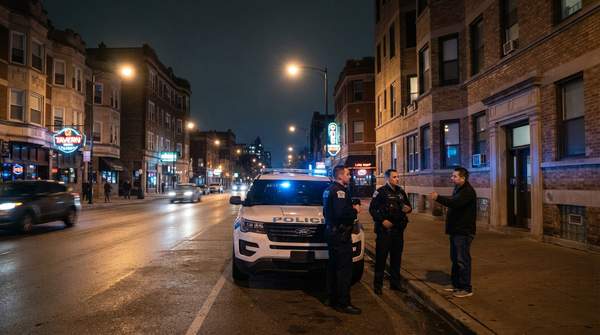
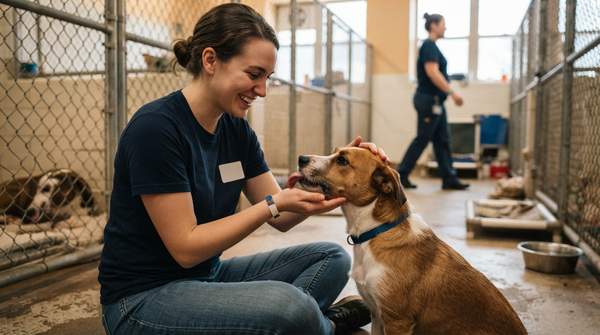
As of the latest available data, Madison's CARES teams have responded to nearly 15,000 calls. They have assisted almost 9,000 individuals with non-violent behavioral health emergencies, according to Cityofmadison. These specialized teams offer a crucial alternative emergency service, providing on-site care where it's needed most.
The urgent demand for specialized behavioral health emergency response is immense. Yet, traditional emergency services remain the default. This often leads to less appropriate and more costly interventions for individuals in crisis.
CARES's success, strategic expansion, and proven ability to divert individuals from traditional systems suggest a clear path forward. Community-based alternative response models will likely become a standard and essential part of public safety infrastructure in forward-thinking cities.
Key Facts About CARES Madison
- CARES teams have assisted nearly 9,000 individuals since September 1, 2021, according to Cityofmadison.
- The program has surpassed 15,000 total calls for services, according to Cityofmadison.
- A CARES response pairs a community paramedic from the Madison Fire Department with a crisis worker from Journey Mental Health, according to community alternative response emergency services ....
- Nearly three-quarters (76%) of individuals assisted by CARES did not require a referral to ongoing services, according to Cityofmadison.
- CARES handled over half of Madison's mental health calls in 2022, according to Captimes.
CARES plays a significant role in Madison's emergency response landscape, demonstrating its capacity to manage a substantial portion of behavioral health incidents effectively and appropriately.
How CARES Madison Has Expanded
The Government Performance Lab (GPL) at Harvard's Kennedy School began collaborating with the City of Madison in 2023 to evaluate the CARES program, according to govlab.hks.harvard.edu. This partnership validates the program's value and its potential for wider adoption.
In 2024, Dane County announced a grant program to extend CARES services to Sun Prairie, according to govlab.hks.harvard.edu. This rapid growth, seen in both the 2023 GPL collaboration and the 2024 Dane County grant, marks a critical shift in public safety. It shows communities now grasp the high cost and poor results of using police and emergency rooms for non-violent behavioral health crises.
Evaluating and expanding CARES moves this model from experiment to standard practice. This reflects growing governmental support for community-based solutions to behavioral health emergencies.
Impact of CARES on Traditional Emergency Response
Nearly three-quarters (76%) of individuals assisted by CARES did not require a referral to ongoing services, according to Cityofmadison. The high success rate in immediate crisis resolution proves the program's efficiency in de-escalating situations on-site.
CARES teams have assisted nearly 9,000 individuals with non-violent behavioral health emergencies since September 2021, according to Cityofmadison. The volume of individuals assisted, combined with the 76% resolution rate, makes investing in specialized, community-based responses like CARES a fiscally sound choice. It frees up overwhelmed emergency services and reduces strain on costly, ill-suited systems like emergency rooms and jails.
The Future of Alternative Emergency Services
The 2023 collaboration with Harvard's Government Performance Lab sets a path for evaluating and standardizing community-based emergency response models. The 2023 collaboration with Harvard's Government Performance Lab offers a blueprint for understanding and replicating successful programs like CARES.
Dane County's 2024 grant program to expand CARES to Sun Prairie confirms a regional scaling strategy for these services. Dane County's 2024 grant program to expand CARES to Sun Prairie proves the CARES model is a viable and effective solution beyond Madison's city limits.
CARES's proven success and governmental support mean it is more than a local initiative. It appears poised to become a national model, an essential part of public safety infrastructure across the country.
What are the alternatives to CARES Madison emergency services?
Traditional emergency services, mainly law enforcement and standard EMS, remain the default for calls not handled by specialized teams. Before CARES, these systems often managed behavioral health crises. This frequently led to emergency room visits or justice system involvement, lacking on-site mental health expertise.
How has CARES Madison changed emergency response in 2026?
CARES has significantly altered Madison's emergency response. It diverts a substantial volume of non-violent behavioral health calls from police and traditional EMS. This frees law enforcement and paramedics to focus on crimes and emergencies needing their specific skills, making city resource deployment more efficient.
What is the impact of CARES Madison on mental health crisis response?
The program provides immediate, on-site mental health support through its crisis workers. This service was often missing from traditional emergency calls. Direct intervention effectively de-escalates situations; 76% of individuals do not need further ongoing services. This reduces the burden on emergency rooms and jails.