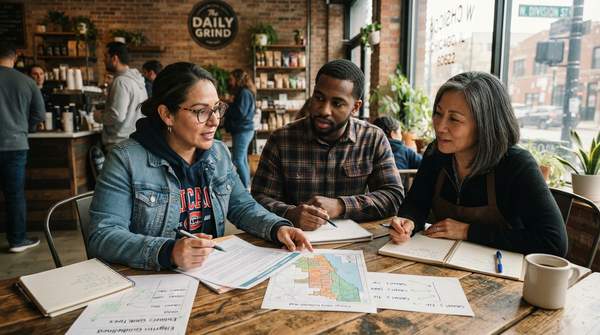
On Main Street in Northport, local businesses are actively hosting events and collaborating with neighbors to attract customers, demonstrating that a traditional 'shopkeeper mentality' is no longer sufficient. This proactive shift creates new opportunities for connection, fostering a vibrant community hub. Businesses are transforming their physical spaces to offer value beyond simple product sales.
E-commerce, especially in 2026, has significantly reduced typical foot traffic and compelled many retailers to rethink their physical footprints. However, resilient local businesses are discovering new methods to engage with customers and provide distinctive value that online platforms cannot replicate.
The future of Main Street retail will likely be characterized by a hybrid model where physical spaces serve as experience hubs and community anchors, rather than just points of sale.
The E-commerce Squeeze on Main Street
E-commerce has compelled many local businesses to fundamentally rethink their operational models and customer interaction strategies. This digital pressure means brick-and-mortar stores must continually re-evaluate how they present themselves to consumers. The shift online has created an environment where simply opening doors from nine to five no longer guarantees customer engagement or sustained revenue.
Online Efficiency: A Double-Edged Sword
- 85% of small business owners reported that operating on e-commerce platforms helped reduce overall expenses, according to smallbusinessroundtable.
While e-commerce presents competitive challenges, it also offers substantial operational efficiencies. Small businesses can leverage these platforms to cut costs, freeing up capital for other investments. This efficiency allows retailers to reallocate resources towards enhancing the in-person experience, which is crucial for their physical locations.
From Shopkeeper to Entrepreneur: A Mindset Shift
| Aspect | Traditional 'Shopkeeper' | Modern 'Entrepreneur' |
|---|---|---|
| Primary Focus | Transactional sales | Community engagement, experience |
| Operating Model | Fixed hours, product display | Flexible, event-driven, curated space |
| Value Proposition | Product acquisition | Shared experience, connection |
Data based on insights from Northport Journal.
The traditional 'shopkeeper mentality' of merely opening from nine to five is no longer sufficient for survival in 2026. Businesses require an entrepreneurial mindset to navigate current market demands, according to the Northport Journal. This means moving beyond passive selling to actively creating reasons for customers to visit and engage. The shift transforms physical stores into dynamic spaces that prioritize experience over simple transactions.
Experience Wins: The New Local Retail Advantage
A physical storefront offers an 'experience component' that a website cannot replicate, a factor crucial for successful businesses on Main Street, as highlighted by the Northport Journal. This unique in-person value is what distinguishes thriving local retailers from those struggling against online competition. Businesses that curate engaging events and foster genuine connections are proving to be the winners in this evolving retail landscape.
The enduring value of a physical store lies in its ability to provide immersive experiences and foster human connection, aspects that digital platforms cannot replicate. This focus on unique experiences allows local businesses to turn potential online competitors into collaborators through shared events and community initiatives.
Expert Insights on Retail's Future
Companies that view e-commerce solely as a threat to physical retail are missing the strategic opportunity to leverage it for cost efficiency, freeing up capital to invest in the 'experience component' that the Northport Journal identifies as crucial for Main Street's survival.
- 85% of small business owners reported that operating on e-commerce platforms reduced overall expenses, according to smallbusinessroundtable.
- Successful businesses on Main Street prioritize an 'experience component' that websites cannot offer, reports the Northport Journal.
The operational efficiencies gained through e-commerce allow businesses to reallocate funds. Instead of solely focusing on maintaining a physical presence for transactions, capital can support enhanced in-store experiences, community events, and unique customer interactions. This strategic pivot transforms the role of the physical store from a mere point of sale to a vibrant community hub.
The 'shopkeeper mentality' of fixed hours and transactional focus, as described by the Northport Journal, is a relic; the future of Main Street belongs to entrepreneurial businesses that transform their physical spaces into dynamic community centers, making transactions secondary to engagement.
- Businesses on Main Street in Northport are finding new ways to connect with customers, such as hosting events and collaborating with other local businesses, states the Northport Journal.
- An entrepreneurial mindset, rather than a traditional 'shopkeeper mentality,' is necessary for survival, according to the Northport Journal.
This implies that local retailers must adopt a more agile and creative approach. By shifting from a static, transaction-focused model to one that emphasizes dynamic engagement and community building, businesses can create compelling reasons for customers to visit. The physical store becomes a destination for shared experiences, with purchases often being a byproduct of that engagement.
Key Takeaways for Local Businesses
- 85% of small businesses report e-commerce platforms reduce overall expenses.
- Physical stores must invest in non-transactional experiences to justify their existence.
- The 'shopkeeper mentality' is obsolete; an entrepreneurial mindset is crucial for survival.
- Local businesses leverage their physical presence as a unique 'experience component' that online platforms cannot replicate.