The 'Buy Local' Paradox Amid Economic Pressures

While 73% of global consumers express concern over rising everyday prices, the global financial well-being index has steadily climbed from 100.

MA
Marco Alvarez

June 8, 2026 · 3 min read

A visual contrast between a warm, authentic local market and a sterile supermarket aisle, illustrating the 'buy local' paradox amid economic pressures.

While 73% of global consumers express concern over rising everyday prices, the global financial well-being index has steadily climbed from 100.8 in April 2024 to 103.2 in April 2025, according to Deloitte. The steady climb in the global financial well-being index from 100.8 in April 2024 to 103.2 in April 2025 points to underlying resilience in household finances, even as economic anxieties persist among a significant portion of the population.

A tension emerges: consumers voice deep concern about rising prices and a desire to support local businesses, yet their financial well-being improves. This often leads them to purchase 'local' products from large chain stores, bypassing independent merchants.

Independent local retailers struggle to translate consumer sentiment into direct sales. Convenience and perceived value from larger entities often override the desire to support small businesses. This redefines traditional notions of 'buying local' within current market realities.

The Shifting Landscape of Consumer Spending

US consumer sentiment fell to a two-year low, according to McKinsey & Company. Despite this pessimism, consumer spending increased by 0.5% in April 2026, according to bea. Consumers may voice economic concerns and cut back on discretionary categories, yet their overall spending continues to grow.

Consumers are becoming more strategic, prioritizing essentials or perceived value while pulling back on non-essential items. This reallocation of funds occurs even as overall economic activity continues, creating a complex and contradictory spending environment for local retail. The implication for independent businesses is a heightened need to demonstrate clear, tangible value beyond mere local origin.

The 'Buy Local' Paradox

Consumers increasingly seek local products, viewing it as support for domestic producers and the economy, according to PMC. This ethnocentric preference for domestically produced goods is strong. Yet, this sentiment often benefits large chain stores more than independent merchants; Polish consumers, for instance, favor buying local products from chains over smaller manufacturer-owned stores, according to PMC in 2024.

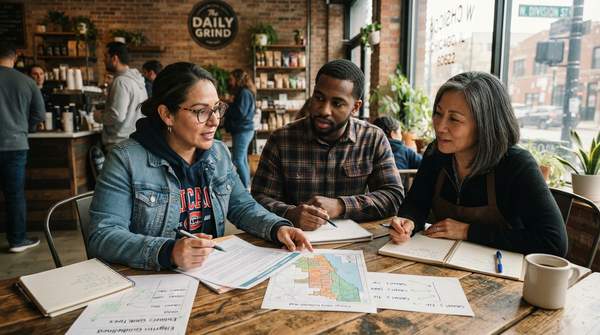
The 'buy local' movement, therefore, inadvertently funnels support to corporate retailers who simply stock local products, rather than directly boosting small, independent producers. This suggests a critical need for independent businesses to differentiate themselves beyond mere origin, perhaps through unique experiences or specialized offerings that large chains cannot replicate.

Underlying Pressures and Global Context

U.S. retail companies face a tougher road ahead as the Iran war continues, according to Reuters. Geopolitical instability introduces significant uncertainty, influencing consumer confidence and the operational landscape for retailers.

This external pressure complicates consumer spending decisions, potentially making shoppers more cautious or value-driven. Such a climate particularly challenges independent local businesses, which often lack the scale to absorb increased costs or market fluctuations. Their vulnerability highlights the broader economic impact of global events on local economies.

The Path Ahead for Local Retail

Independent local businesses must confront the reality that consumers often prefer buying local goods from large chains. A diagnostic survey among 404 respondents from Eastern Poland in 2024, according to PMC, illustrates this regional dynamic.

A diagnostic survey among 404 respondents from Eastern Poland in 2024 underscores the necessity for localized strategies and a deeper understanding of diverse consumer behaviors. For independent businesses, this means moving beyond general appeals to 'local' and instead crafting unique value propositions that resonate with specific community needs and preferences, a critical step to compete with larger entities.

Independent local retailers will likely need to forge stronger, more distinct identities and community ties if they are to thrive amidst consumer preferences for convenience and the strategic maneuvers of larger chains.